Tag: skincare ingredients

  • Skincare Ingredient Compatibility Chart – 12 Ingredients, What to Layer and What to Split (with an Interactive Checker)

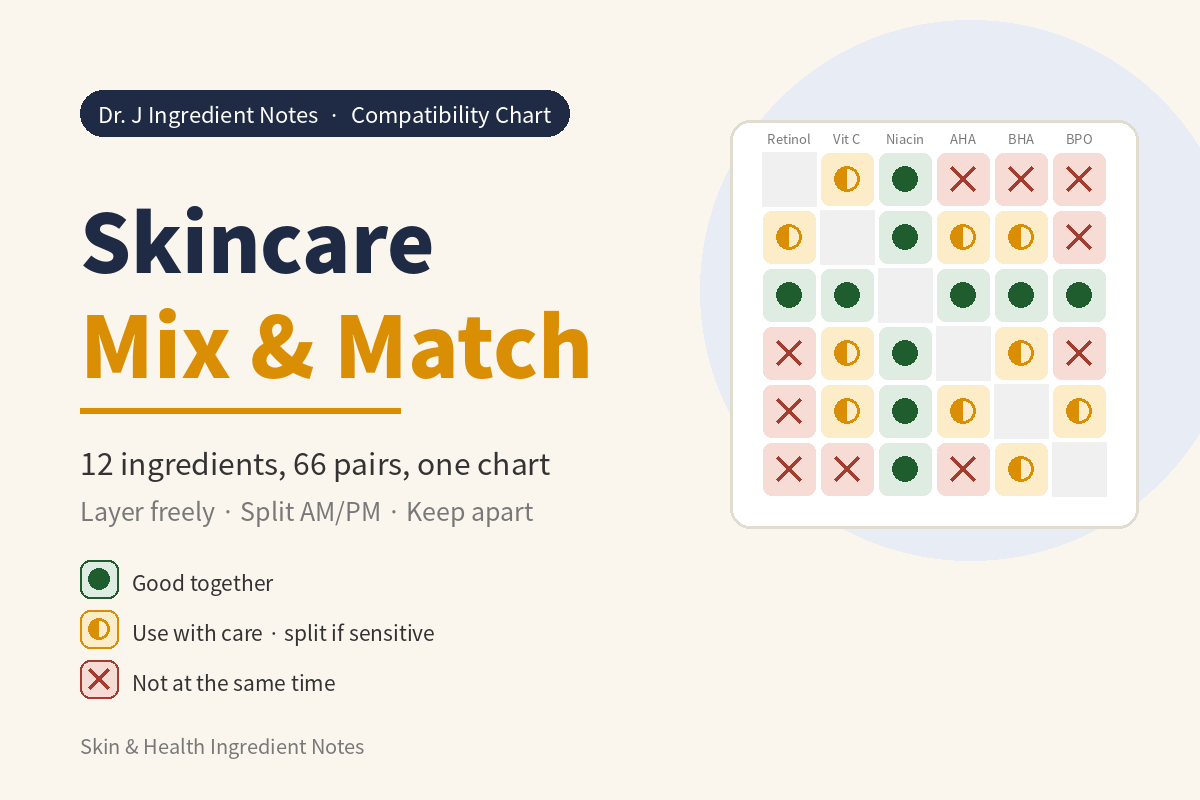
    Skincare mix and match – 12 ingredients, 66 pairs, one chart; good together, use with care, not at the same time – Dr. J Ingredient Notes cover

    🇰🇷 이 글의 한국어판 → Korean version (한국어)

    Hello, I’m Dr. J. I formulate skincare products in Korea.
    Whenever I publish an ingredient post, the question that comes back most often – in comments and messages – is this one: “Can I use X together with Y?” Retinol and vitamin C. Niacinamide and vitamin C. AHA and retinol. And if you’ve searched for the answer, you probably found a different one on every site.

    So today I’ve put all 66 pairings of 12 common ingredients into one chart. You can read the chart on its own, and below it there’s an interactive checker: pick two ingredients and the answer appears. But first, a short section on what “they don’t go together” actually means – because once you know that, you can judge pairs that aren’t in the chart yourself. There are only three reasons.


    In a hurry? These six lines

    Retinol + niacinamide → good. Niacinamide builds up the barrier and takes the edge off retinol
    Niacinamide + vitamin C → good. The “never mix them” rule came from old lab conditions, not from skin
    Retinol + vitamin C → fine together (there’s a study), but beginners find vitamin C in the AM, retinol at night easier
    Retinol + AHA/BHA → not on the same night. Exfoliation plus retinol doubles the irritation. Alternate nights
    Benzoyl peroxide + retinol or vitamin C → never at the same time. Benzoyl peroxide is an oxidizer and breaks the other one down. Split AM/PM
    Hyaluronic acid, ceramides, panthenol, PDRN → the “soothing team,” compatible with everything. Keep them next to anything that stings
     

    Pick two ingredients – compatibility checker


    +
    Retinol + Vitamin C (pure) → ● Use with care – split if sensitive
    Fine together. A 3-month study that applied 0.07% retinol with 3.5% vitamin C found improvements in epidermal thickness. Both can sting, though, so at first vitamin C in the morning and retinol at night is easier.

    ※ Vitamin C here means pure L-ascorbic acid (derivatives are gentler). General guidance – a product’s concentration and formula can change the answer.


    1. A bad pairing is always one of three things

    There’s a lot of talk about ingredient combinations, but from a formulator’s chair, “don’t use them together” only ever has three reasons behind it. Remember these three and you’re set.

    · First, the irritation overlaps. The most common reason by far. Retinol stings and AHA stings; put both on the same night and your barrier takes two hits. The ingredients aren’t fighting each other – your skin just can’t absorb both at once. So the fix is simple too: split them, by day of the week or by morning and night
    · Second, one destroys the other. This is the case where ingredients really do “fight,” and in skincare it’s rare. The main culprit is benzoyl peroxide: a strong oxidizer that breaks down oxidation-sensitive ingredients like retinoids and vitamin C. In one study, prescription tretinoin combined with benzoyl peroxide and exposed to light lost more than half its content in 2 hours and 95% in 24. For pairs like this, keep the timing clearly apart
    · Third, the pH is different. The reason you’ll see most often online – and an exaggerated one. Pure vitamin C is stable below pH 3.5 and niacinamide prefers near-neutral, so the story went that the two cancel each other out. But that finding came from 1960s experiments that boiled the mixture at high heat for a long time; in the few minutes a room-temperature formula sits on your skin, it isn’t a problem. That’s why so many current products put both in one bottle

    Keep these three in mind as you read the chart: green means none of the three apply, yellow means watch the first (irritation), and red means the first is severe or the second (oxidation) applies.


    2. The compatibility chart – 12 ingredients × 66 pairs
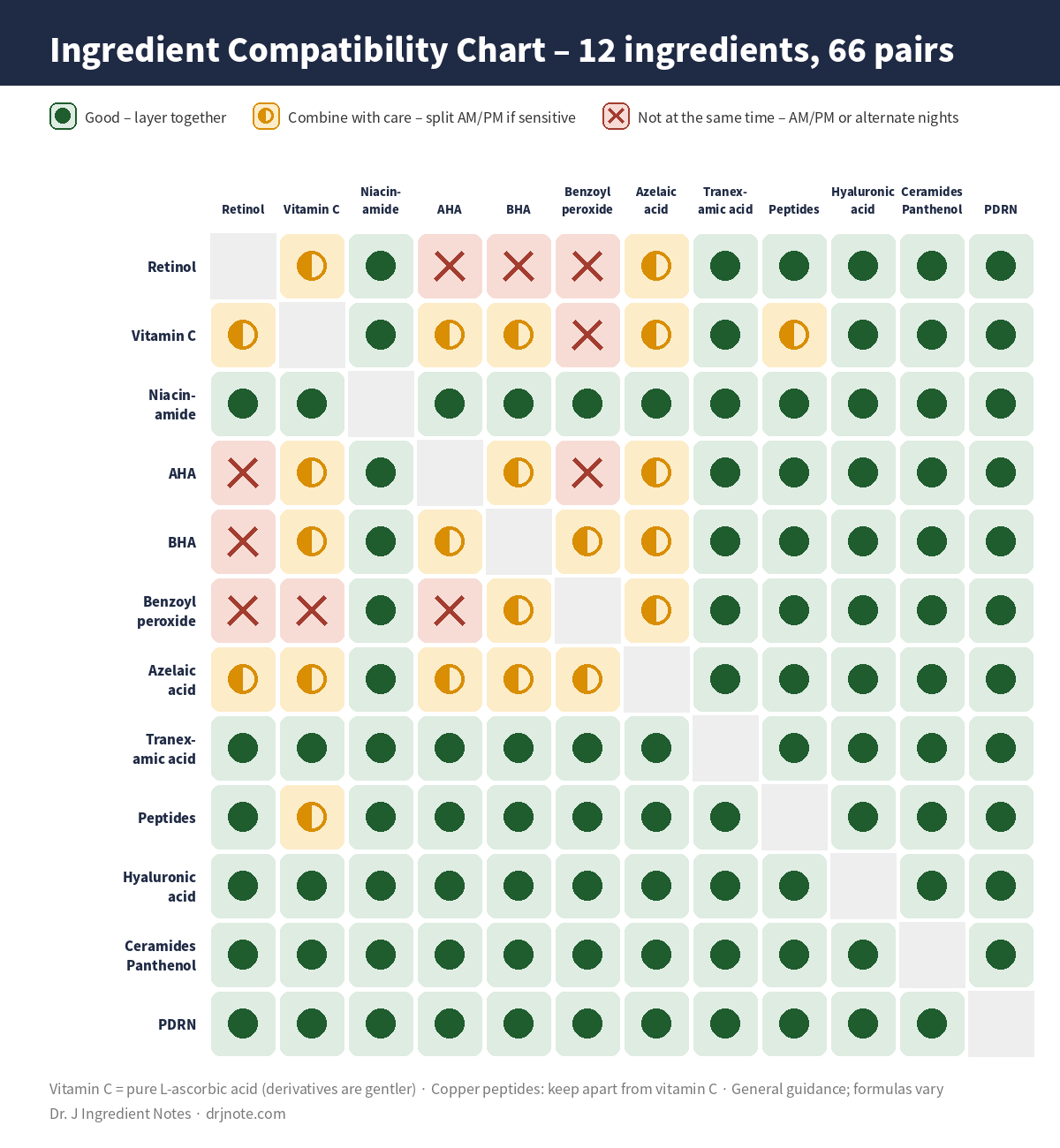
    Skincare ingredient compatibility chart 12×12 – retinol, vitamin C, niacinamide, AHA, BHA, benzoyl peroxide, azelaic acid, tranexamic acid, peptides, hyaluronic acid, ceramides, PDRN – each pair rated good / use with care / not at the same time
    ● Green – good together. Layer them in the same routine. Some pairs actively help each other
    ● Yellow – can be combined, watch the irritation. Resilient skin can use both together; sensitive skin should split them between morning and evening
    ✕ Red – not at the same time. Keep them clearly apart: morning/night, or different days

    Two notes on reading the chart. Vitamin C here means pure L-ascorbic acid. The derivatives (ascorbyl glucoside, 3-O-ethyl ascorbic acid and so on) are much gentler, and most of the yellow cells turn green with them. And among peptides, copper peptides are the one exception where splitting from vitamin C is the safer choice: vitamin C can reduce the copper and both may lose activity. The research on that is thin, but it’s a rule that costs you nothing to follow.


    3. The 10 most-asked pairs, with the evidence
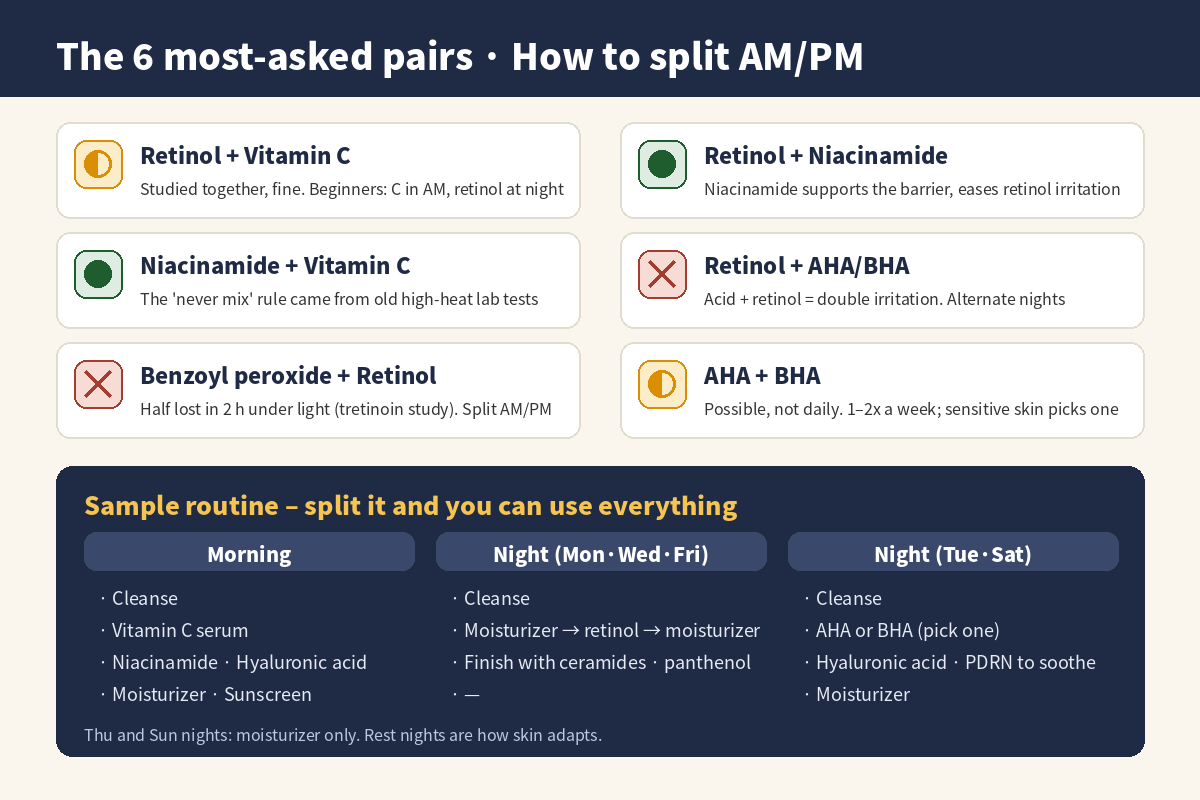
    The 6 most-asked ingredient pairs and a sample AM/PM routine – retinol + vitamin C, retinol + niacinamide, niacinamide + vitamin C, retinol + AHA/BHA, benzoyl peroxide + retinol, AHA + BHA

    1. Retinol + vitamin C → fine together; beginners, split them. A 3-month study that applied 0.07% retinol together with 3.5% vitamin C found improvements in epidermal thickness. “Never use them together” is simply not true. Both can sting, though, so vitamin C in the morning and retinol at night is the easy way in.

    2. Retinol + niacinamide → good. Niacinamide increases ceramide synthesis – ceramides being the building blocks of the skin barrier – and cushions retinol’s dryness and tingling. That’s why so many products combine them in one bottle.

    3. Niacinamide + vitamin C → good. As explained in section 1, the conflict is a myth. Korea’s list of officially recognized brightening ingredients puts niacinamide (2–5%) and vitamin C derivatives side by side. If uneven tone is your concern, using both is actually a plus.

    4. Retinol + AHA/BHA → not on the same night. AHAs (glycolic, lactic) and BHA (salicylic acid) exfoliate; retinol speeds up cell turnover. Together, a thin, tight feeling and redness come quickly. Acids on Tue/Sat, retinol on Mon/Wed/Fri, for example.

    5. AHA + BHA → possible, but not every day. Plenty of products contain both. Used daily, though, the barrier breaks down. Keep it to once or twice a week, and if you’re sensitive pick one.

    6. Benzoyl peroxide + retinol → split AM/PM. The degradation study above is the reason. If you’re on an acne routine, benzoyl peroxide in the morning and retinol at night lets you keep both.

    7. Benzoyl peroxide + vitamin C → split AM/PM. Vitamin C is an antioxidant, benzoyl peroxide an oxidizer. Put them together and the vitamin C is used up first.

    8. Vitamin C + AHA/BHA → watch the irritation. All three are acidic, so pH is not the issue – overlapping sting is. Resilient skin can combine them; if you’re sensitive, vitamin C in the morning and acids at night.

    9. Tranexamic acid + niacinamide or vitamin C → good. The three block pigment through different pathways, which is why they’re combined in brightening routines. Tranexamic acid is also very low-irritation.

    10. Hyaluronic acid, ceramides, panthenol, PDRN + anything → good. These four are the “soothing team.” On the days you use something that stings (retinol, acids, benzoyl peroxide), applying them before and after makes adjusting much easier. The PDRN I covered last time belongs to this team.


    4. How to split – a sample AM/PM routine and layering order

    “Split them” can sound vague, so here is one example. You don’t have to follow it exactly – the only rule to keep is one irritating active per day.

    Morning Night (Mon · Wed · Fri) Night (Tue · Sat)
    Cleanse → vitamin C → niacinamide · hyaluronic acid → moisturizer → sunscreen Cleanse → moisturizer → retinol → moisturizer → ceramides · panthenol Cleanse → AHA or BHA (pick one) → hyaluronic acid · PDRN → moisturizer
    Thursday and Sunday nights: moisturizer only. Skin needs rest nights to adjust
    Layer thin to thick. Watery serums first, creams last. About a minute between layers reduces overlap
    Add new actives one at a time, two weeks apart. That way, if something goes wrong, you know what caused it
    ✔ If you use benzoyl peroxide for acne, give it the morning slot and skip retinol and vitamin C that night
     

    The one-line takeaway

    A bad pairing comes down to overlapping irritation, oxidation or pH – and pH is mostly overblown.
    One irritating active per day, benzoyl peroxide on its own, the soothing team always welcome. With those three lines you can judge any pair that isn’t in the chart.

    ▶ Korean version of this post (한국어판): 화장품 성분 궁합표 – 12가지 성분, 같이 써도 되는 것과 시간을 나눌 것
    ▶ See also: Retinol: Start at 0.1% – How to Read the Concentration Numbers and Get Through the First 4 Weeks (Ingredient Encyclopedia #1)
    ▶ Earlier: Not All Vitamin C Serums Work – 3 Conditions the Research Says You Need
    ▶ Earlier: Dull, Rough Skin? Glycolic Acid (AHA) – What the Research Shows and How Much Is Safe
    ▶ Earlier: How to Choose a PDRN Cream – 5 Conditions from the Research

    I’ll keep this chart updated as new research comes out. If there’s a pair you don’t see here, leave a comment. Next in the Ingredient Encyclopedia: niacinamide.

    About the author · Dr. J
    MS in Veterinary Medicine, PhD in Life Sciences. I worked as a researcher at the Korea Research Institute of Bioscience and Biotechnology (KRIBB) and now run Beaurea, a cosmetics manufacturing company, where I write the formulas myself. This blog reads the research papers and the regulatory documents and turns them into plain-language criteria for choosing ingredients. I don’t recommend specific products here – only criteria that apply to any product.
    Sources
    1. Seité S et al. “Histological evaluation of a topically applied retinol-vitamin C combination.” Skin Pharmacology and Physiology 2005;18(2):81-87 – 0.07% retinol + 3.5% vitamin C for 3 months, increased epidermal thickness.
    2. Martin B et al. “Chemical stability of adapalene and tretinoin when combined with benzoyl peroxide in presence and in absence of visible light and ultraviolet radiation.” British Journal of Dermatology 1998;139(Suppl 52):8-11 – tretinoin + benzoyl peroxide under light: over 50% degraded at 2 h, 95% at 24 h.
    3. Tanno O et al. “Nicotinamide increases biosynthesis of ceramides as well as other stratum corneum lipids to improve the epidermal permeability barrier.” British Journal of Dermatology 2000;143(3):524-531.
    4. Milosheska D, Roškar R. “Use of Retinoids in Topical Antiaging Treatments: A Focused Review of Clinical Evidence for Conventional and Nanoformulations.” Advances in Therapy 2022;39(12):5351-5375 – dose-dependent retinoid irritation; start low, pair with moisturizers.
    5. Korea Ministry of Food and Drug Safety, Regulation on the Review of Functional Cosmetics, Annex 4 – recognized brightening ingredients: niacinamide 2–5%, ascorbyl glucoside 2%, 3-O-ethyl ascorbic acid 1–2%, magnesium ascorbyl phosphate 3%, ascorbyl tetraisopalmitate 2%, among others.
    6. The niacinamide–vitamin C “conflict” traces to 1960s experiments under prolonged high heat (formation of nicotinic acid); the general view in dermatology and cosmetic science today is that it does not apply to room-temperature formulas.
    ※ This chart is general guidance and can vary with a product’s concentration, formula and pH. Results vary with individual skin. It does not recommend or criticize any specific product. If you are being treated for a skin condition, talk to a dermatologist before use. The author runs a company that manufactures and sells cosmetics.
  • Retinol: Start at 0.1% – How to Read the Concentration Numbers and Get Through the First 4 Weeks

    Retinol by the numbers – 0.075%, 0.1%, 0.3% and 1% on one concentration scale, Dr. J Ingredient Notes cover

    🇰🇷 이 글의 한국어판 → Korean version (한국어)

    Hello, I’m Dr. J. I formulate skincare products in Korea.
    Starting today I’m adding a series called the Ingredient Encyclopedia: one ingredient at a time, always in the same frame. What it does, how far the evidence goes, how to read the concentration, what to look for on the label, and what not to layer it with. Same five questions, same order, every time.

    First up is retinol. Of all the ingredients used for fine lines, it has the most studies done on real human skin – and, for the same reason, the most myths: “it burned, I quit,” “1% is the good one.” From the manufacturing side, retinol is also one of the hardest ingredients to formulate well, because light and air break it down. That is why the buying criteria for retinol are a little different from everything else.


    In a hurry? These five lines

    ✔ Retinol is a form of vitamin A. Skin converts it to retinoic acid, which is what improves the look of fine lines, rough texture and uneven tone
    ✔ If you’re new, 0.1% is enough to start. In a 52-week study at 0.1%, crow’s-feet fine lines improved 44% and mottled pigmentation 84%
    ✔ Korea’s “functional cosmetic” threshold is 2,500 IU/g (about 0.075%); the EU now caps face products at 0.3%. 1% is not ten times better than 0.1%
    At night, a pea-size amount, twice a week to begin. Tingling and dryness in the first 2–6 weeks are usually the adjustment period. Sunscreen every morning
    Niacinamide, hyaluronic acid and ceramides pair well. Vitamin C goes in the morning, AHA/BHA on a different night, and never benzoyl peroxide at the same time
     

    1. Why retinol works – and how far the evidence goes

    Retinol is vitamin A. Once it’s on your skin, it is converted step by step – retinol → retinal → retinoic acid – and the last one, retinoic acid, does the actual work: it signals skin cells to turn over faster and to make more collagen. Retinoic acid itself is the prescription drug tretinoin (Retin-A), and it cannot be put in a cosmetic. Cosmetic retinol is roughly ten times gentler, which is exactly why it is far easier to use consistently.

    Three key studies on human skin

    · 0.4% retinol, 24 weeks — 36 volunteers aged 80–96 applied it to the inner arm up to three times a week. Fine wrinkles began to look softer from week 4; glycosaminoglycans (the molecules that hold water in the skin) rose about 40%, and procollagen, the raw material for collagen, increased too. But at this strength redness and peeling were common, three people dropped out – and after they stopped, the difference had disappeared by week 48
    · 0.1% stabilized retinol, 52 weeks — 62 people used it on the face for a year in a double-blind trial. Crow’s-feet fine lines improved 44% and mottled pigmentation 84%, and skin biopsies showed more procollagen and hyaluronic acid. This is the study that shows a low concentration, used long enough, is plenty
    · 2025 meta-analysis — pooling 23 randomized trials (3,905 participants) on facial photoaging, retinol was classed among the ingredients with confirmed benefit for fine lines

    So here is where things stand. Whether retinol works is a settled question. The open question is “at what concentration, and how, can I use it for a long time without irritation?” Which brings us to the numbers.


    2. How to read the numbers – 0.075%, 0.1%, 0.3%, 1%

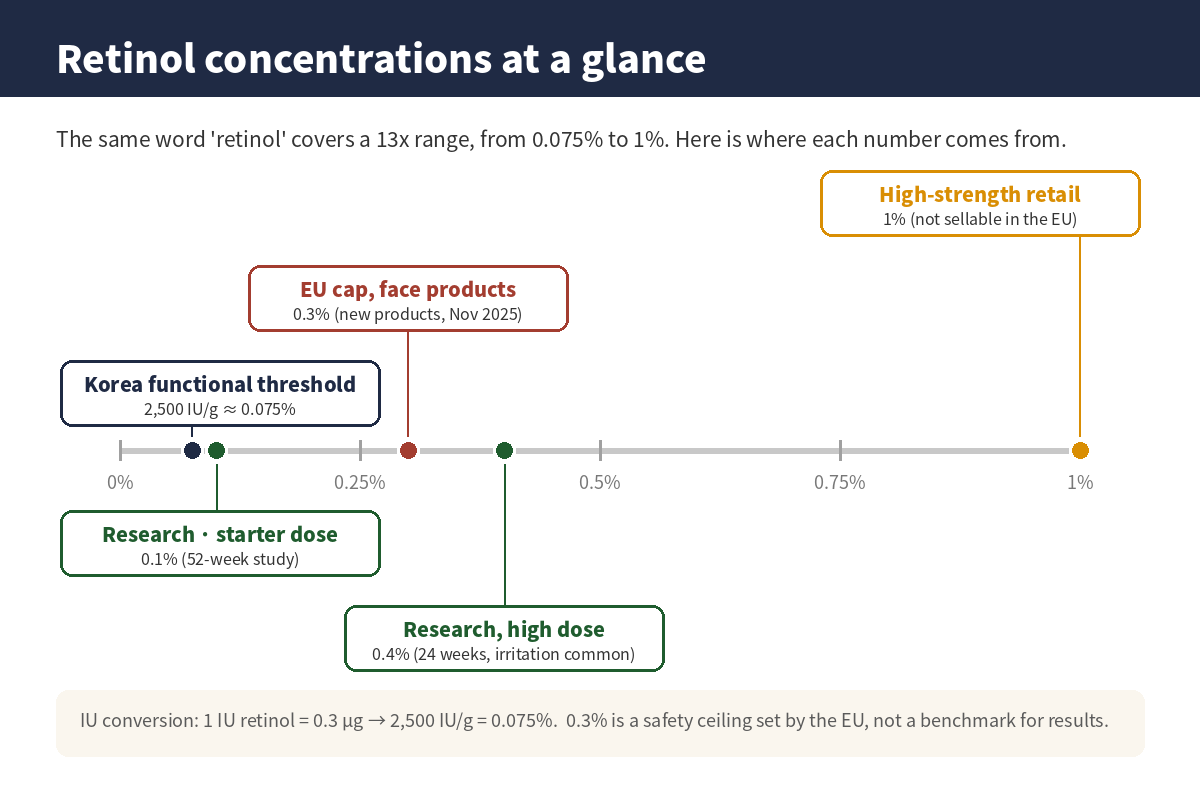
    Retinol concentration map – Korea's functional threshold 0.075%, research doses 0.1% and 0.4%, EU face-product cap 0.3%, high-strength retail 1%

    Retinol products throw a lot of numbers at you. Once you know what each one means, the marketing loses its grip.

    · 2,500 IU/g (≈ 0.075%) — the amount Korea’s Ministry of Food and Drug Safety (our equivalent of the FDA) set for a retinol product to be labeled a “functional cosmetic” for wrinkles without a separate review. For the gentler form, retinyl palmitate, the threshold is 10,000 IU/g. So on a Korean product, “functional cosmetic” means at least 0.075% is in there – it does not mean high strength
    · 0.1% — the dose in the 52-week study above, and the most common starter strength on the market. If you’re new, this is where to begin
    · 0.3%the EU’s cap for face and hand products, adopted in 2024 (body lotions: 0.05%). Since November 2025 no new product above that can launch in the EU, and from May 2027 existing ones can’t be sold either. The reason was not skin irritation: regulators were worried that vitamin A from skincare plus vitamin A from food could push total intake over the daily limit. That’s why EU products now carry a note that they contain vitamin A and daily intake should be considered
    · 0.4%, 1% — 0.4% is the 24-week research dose, where results came with a lot of irritation; 1% is the high-strength retail level common in the US and Korea (the US has no concentration cap for retinol in cosmetics). Results may come faster, but irritation arrives first – and 1% can no longer be sold in the EU

    The one thing I’d ask you to take away: 0.3% is a safety ceiling, not a “you need at least this much to see results” line. Someone who uses 0.1% steadily for a year ends up with a better result than someone who uses 1% for a month and quits because it stings.


    3. It’s not only retinol – the retinoid ladder

    Sometimes the ingredient list says something other than “retinol.” They are all in the vitamin A family, and the easiest way to keep them straight is as a ladder.

    Name (as listed) What it is Who it’s for
    Retinyl palmitate The gentlest form. Needs two conversion steps in the skin, so the effect is the mildest too Very sensitive skin, a first try
    Retinol The reference point for cosmetics. The most studied Most people’s starting point
    Retinal (retinaldehyde) One rung above retinol. One study found 0.05% retinal gave results comparable to prescription tretinoin with less irritation Stepping up after you’ve adjusted to retinol
    Retinoic acid (tretinoin) Prescription drug. Not allowed in cosmetics Through a dermatologist

    This is why retinal is showing up in so many Korean products lately: a rung above retinol without a big jump in irritation. The catch is that retinal is even less stable than retinol, so the formula and the packaging matter even more. More on that in section 5.


    4. The first 4 weeks – do it this way and you won’t quit

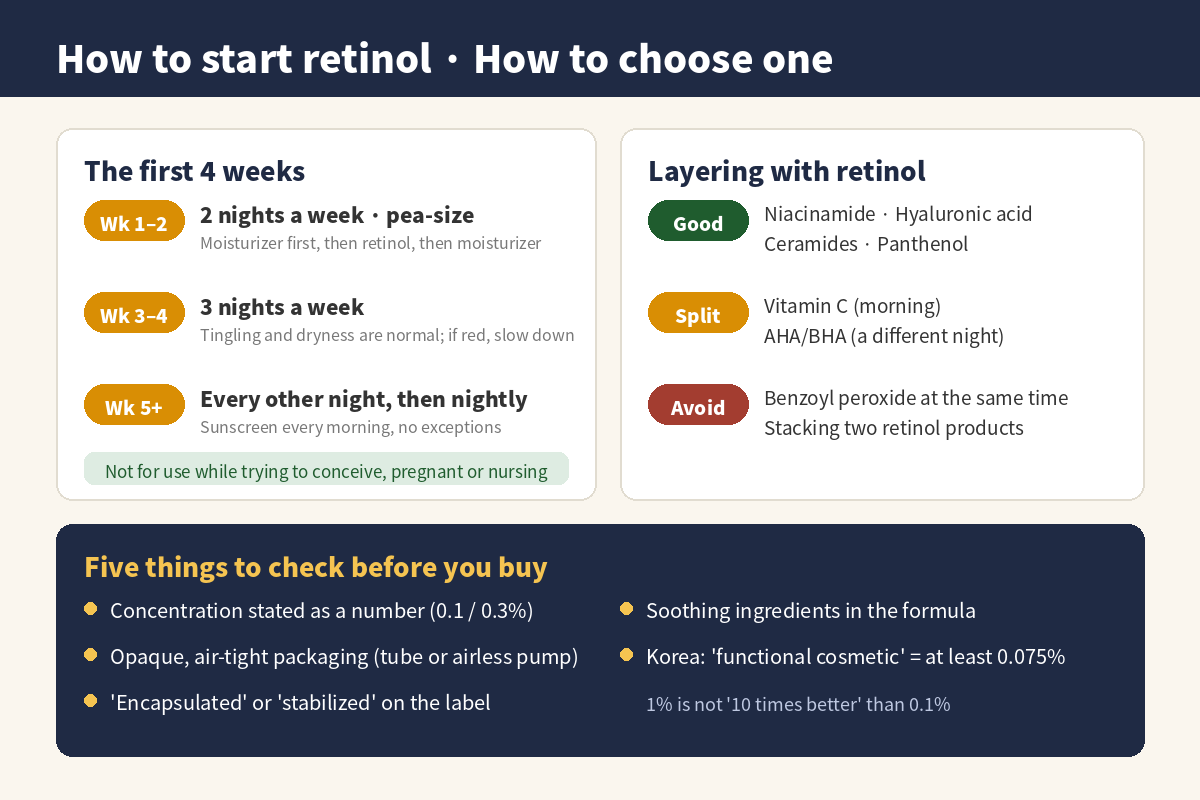
    How to start retinol – the first 4 weeks, what to layer and what to avoid, five things to check before you buy

    People give up on retinol for almost one reason only: they used it every night, too much, from day one, and their skin stung and peeled. Dermatologists call this the adjustment period (“retinization”), and it usually lasts 2–6 weeks. Get through it and the rest is easy.

    Weeks 1–2 — nights only, twice a week, one pea-size amount for the whole face. After cleansing, moisturizer first, then retinol, then moisturizer again on top (the “sandwich”). Skip the eye corners, the corners of the mouth and the sides of the nose
    Weeks 3–4 — if it’s going well, three nights a week. Mild tingling, dryness and flaking are part of adjusting; if you get red and hot, drop back a night
    Week 5 and on — every other night, then nightly. This is also when you can step up a concentration
    Sunscreen every morning, no exceptions. Skin on retinol is more sun-sensitive, and retinol itself breaks down in light – which is why it goes on at night
    Not while trying to conceive, pregnant or nursing. Very little topical retinol is absorbed, but vitamin A derivatives can affect a developing baby, and dermatologists advise against use during this time

    What can you layer it with?

    · Niacinamide → good. It increases ceramides, the building blocks of the skin barrier, which cushions retinol’s dryness and sting. Many products put the two in one bottle
    · Hyaluronic acid, ceramides, panthenol, centella → good. Your best friends during the adjustment period
    · Vitamin C (pure L-ascorbic acid) → fine together, but split them at first. A 3-month study applying 0.07% retinol with 3.5% vitamin C found improvements in epidermal thickness, so “never mix them” is a myth. Both can sting, though, so beginners find vitamin C in the morning, retinol at night easier
    · AHA (glycolic) and BHA (salicylic) → a different night. Exfoliating acids on the same night as retinol doubles the irritation. Put acids on Mon/Thu and retinol on Tue/Fri, for example
    · Benzoyl peroxide (acne treatment) → never at the same time. When prescription tretinoin was combined with benzoyl peroxide under light, more than half of it broke down within 2 hours. Retinol is oxidation-sensitive too, so it’s benzoyl peroxide in the morning, retinol at night
    · Two retinol products (serum + cream) → avoid. The concentrations add up and so does the irritation. Pick one

    All 66 pairings of 12 common ingredients are in one chart in the Skincare Ingredient Compatibility Chart.


    5. Five things to check before you buy – a formulator’s eye

    Retinol is fragile in light, air and heat. A review of retail products from several countries found that in almost every cosmetic, the retinoid content fell below what the label stated – instability is the rule, not the exception. So with retinol, “how much did they put in” matters less than “is it still active when you open it.” Here are the five things a manufacturer looks at when judging a product.

    Is the concentration stated as a number? — “contains retinol” with no % could mean 0.01%. A product that says 0.1% or 0.3% is being honest with you
    Is the packaging opaque and air-tight? — retinol in a clear glass dropper bottle oxidizes every time you open it. An aluminum tube or an airless pump is the right container
    Does it say “encapsulated” or “stabilized”? — that means the retinol is wrapped in tiny capsules that shield it from light and air and also reduce irritation. The 52-week study used a stabilized retinol
    Are soothing and moisturizing ingredients in the formula? — niacinamide, ceramides, panthenol or madecassoside near the top of the list make the adjustment period far easier
    If it’s a Korean product, know what “functional cosmetic” means — it guarantees at least the threshold amount (0.075%). No label doesn’t make a product bad, but if it also doesn’t state a percentage, look twice
     

    The one-line takeaway

    Retinol: start at 0.1%, at night, twice a week, and give it 4 weeks to adjust.
    Choose a product with a stated percentage, opaque packaging and soothing ingredients; keep vitamin C in the morning, acids on other nights and benzoyl peroxide apart. Do that for a year and the change the studies measured shows up on your own face.

    ▶ Korean version of this post (한국어판): 레티놀, 처음이라면 0.1%부터 – 농도 숫자 읽는 법과 처음 4주 사용법
    ▶ Earlier: Not All Vitamin C Serums Work – 3 Conditions the Research Says You Need
    ▶ Earlier: Dull, Rough Skin? Glycolic Acid (AHA) – What the Research Shows and How Much Is Safe
    ▶ See also: Skincare Ingredient Compatibility Chart – 12 Ingredients, What to Layer and What to Split

    Next in the Ingredient Encyclopedia: niacinamide.
    Curious about an ingredient? Leave a comment and I’ll look up the research and explain it simply.

    About the author · Dr. J
    MS in Veterinary Medicine, PhD in Life Sciences. I worked as a researcher at the Korea Research Institute of Bioscience and Biotechnology (KRIBB) and now run Beaurea, a cosmetics manufacturing company, where I write the formulas myself. This blog reads the research papers and the regulatory documents and turns them into plain-language criteria for choosing ingredients. I don’t recommend specific products here – only criteria that apply to any product.
    Sources
    1. Korea Ministry of Food and Drug Safety, Regulation on the Review of Functional Cosmetics, Annex 4 (ingredients exempt from data submission) – wrinkle category: retinol 2,500 IU/g, retinyl palmitate 10,000 IU/g, adenosine 0.04%, polyethoxylated retinamide 0.05–0.2% (conversion: 1 IU retinol = 0.3 µg).
    2. Commission Regulation (EU) 2024/996 of 3 April 2024 – retinol, retinyl acetate, retinyl palmitate: 0.3% retinol equivalent in face and hand products, 0.05% in body lotions; mandatory vitamin A intake statement; new products from 1 Nov 2025, existing products from 1 May 2027.
    3. Kafi R, Kwak HS, et al., Kang S. “Improvement of naturally aged skin with vitamin A (retinol).” Archives of Dermatology 2007;143(5):606-612.
    4. Randhawa M et al. “One-year topical stabilized retinol treatment improves photodamaged skin in a double-blind, vehicle-controlled trial.” Journal of Drugs in Dermatology 2015;14(3):271-280.
    5. “Comparative efficacy of topical interventions for facial photoaging: a network meta-analysis.” Scientific Reports 2025 – 23 RCTs, 3,905 participants.
    6. Milosheska D, Roškar R. “Use of Retinoids in Topical Antiaging Treatments: A Focused Review of Clinical Evidence for Conventional and Nanoformulations.” Advances in Therapy 2022;39(12):5351-5375.
    7. Seité S et al. “Histological evaluation of a topically applied retinol-vitamin C combination.” Skin Pharmacology and Physiology 2005;18(2):81-87.
    8. Martin B et al. “Chemical stability of adapalene and tretinoin when combined with benzoyl peroxide in presence and in absence of visible light and ultraviolet radiation.” British Journal of Dermatology 1998;139(Suppl 52):8-11.
    9. Tanno O et al. “Nicotinamide increases biosynthesis of ceramides as well as other stratum corneum lipids to improve the epidermal permeability barrier.” British Journal of Dermatology 2000;143(3):524-531.
    ※ This article is general information about cosmetic ingredients, not medical advice. Results vary with individual skin. It does not recommend or criticize any specific product. If you are pregnant, nursing or being treated for a skin condition, talk to a dermatologist before use. The author runs a company that manufactures and sells cosmetics.
  • How to Choose a PDRN Cream – 5 Conditions from the Research

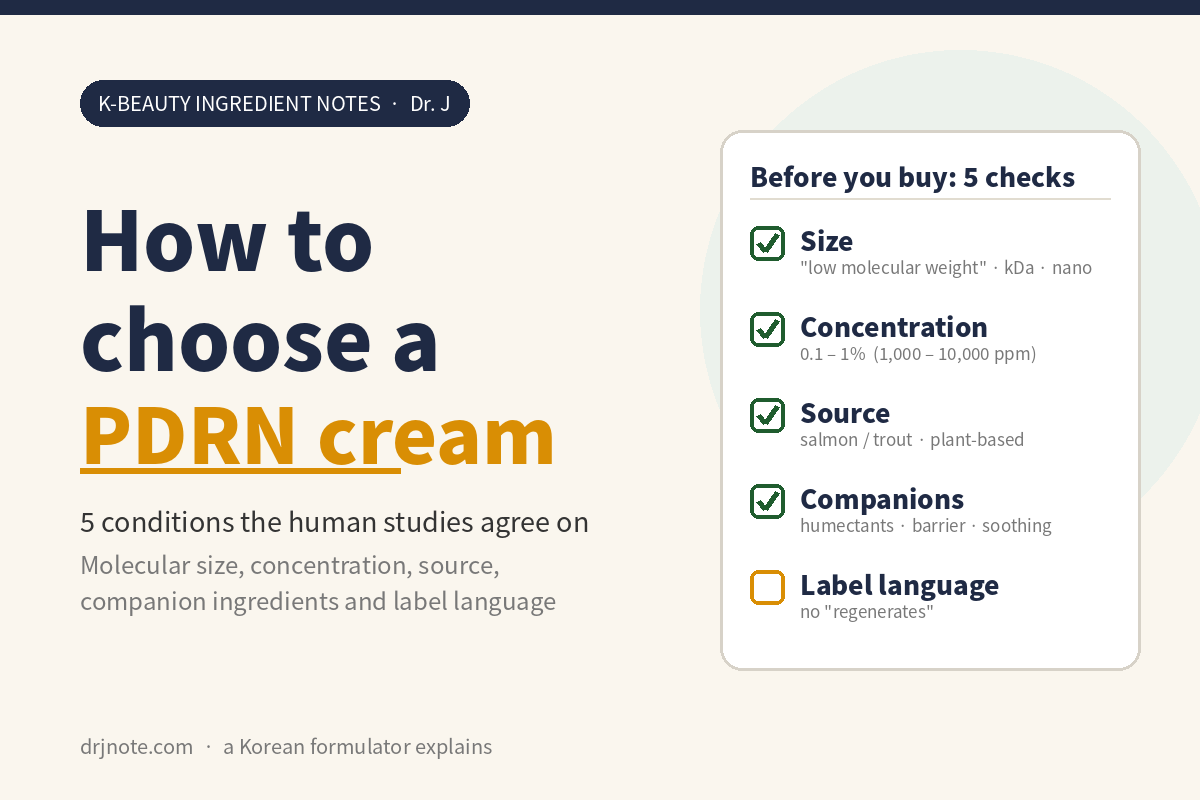
    How to choose a PDRN cream – 5 conditions from the research, cover

    🇰🇷 이 글의 한국어판 → Korean version (한국어)

    Hello, I’m Dr. J. I formulate skincare products in Korea.
    In part one I explained why so many PDRN (“salmon DNA”) ads get flagged in Korea, and how the clinic injection and the jar on your shelf are different products. Writing it left me with a question of my own: “So what can a PDRN cream actually do?”
    I went and read every human study on topical PDRN I could find. The short answer: in the studies, hydration and skin texture changed within two to four weeks. The longer answer is that the PDRN in those studies had specific features – and a product only earns those results if it matches them. That’s what this post is about: how to choose one that does.

    One disclosure first, as always: my company makes PDRN products too. So this is not a post about which product to buy. It’s a set of criteria you can hold up against any product – including ours – and every criterion comes from the studies, not from me.


    The three-line version

    ✔ The three studies that showed results have one thing in common: they made the PDRN smaller. “Low molecular weight,” a kDa figure, or “nano” on the product page is a good sign
    ✔ The studies used 0.1–1% PDRN (1,000–10,000 ppm). Inside that range, a product has “as much as the research”
    Companion humectants and barrier ingredients are what make the hydration last, and calm, honest label language is the mark of a brand that knows the rules
     

    1. What the research found for topical PDRN

    Three human studies on topical PDRN came out in 2025–2026. They’re small – 10 to 31 people each – but they point the same way, and that consistency is what matters.

    · 2 weeks: skin less rough, more glow – 21 Korean women, average age 58 (Pharmaceutics 2025)
    · 4 weeks: better elasticity around the eyes, and faster recovery of moisture loss after irritation – 10 volunteers (IJMS, Dec 2025)
    · 4 weeks: eye-area fine lines and skin thickness improved more than with retinol – 31 women, split-face (PLOS ONE 2026, run by a cosmetics company)

    So there’s good reason to try one if this sounds like you: skin that is dry and sensitive and wants hydration without irritation; skin recovering from a laser or a peel; or, past 50, texture that has turned rough and dull. The study participants were mostly women from their mid-30s to around 60.

    In one line, the changes the research saw were hydration, smoother texture, comfort, and elasticity around the eyes. How much of that you see depends a great deal on the product. The PDRN in these studies had specific features, and a product needs the same ones to deliver the same result. Those features are the five conditions below.


    2. Condition 1 · Molecular size – does the product say it was made smaller?

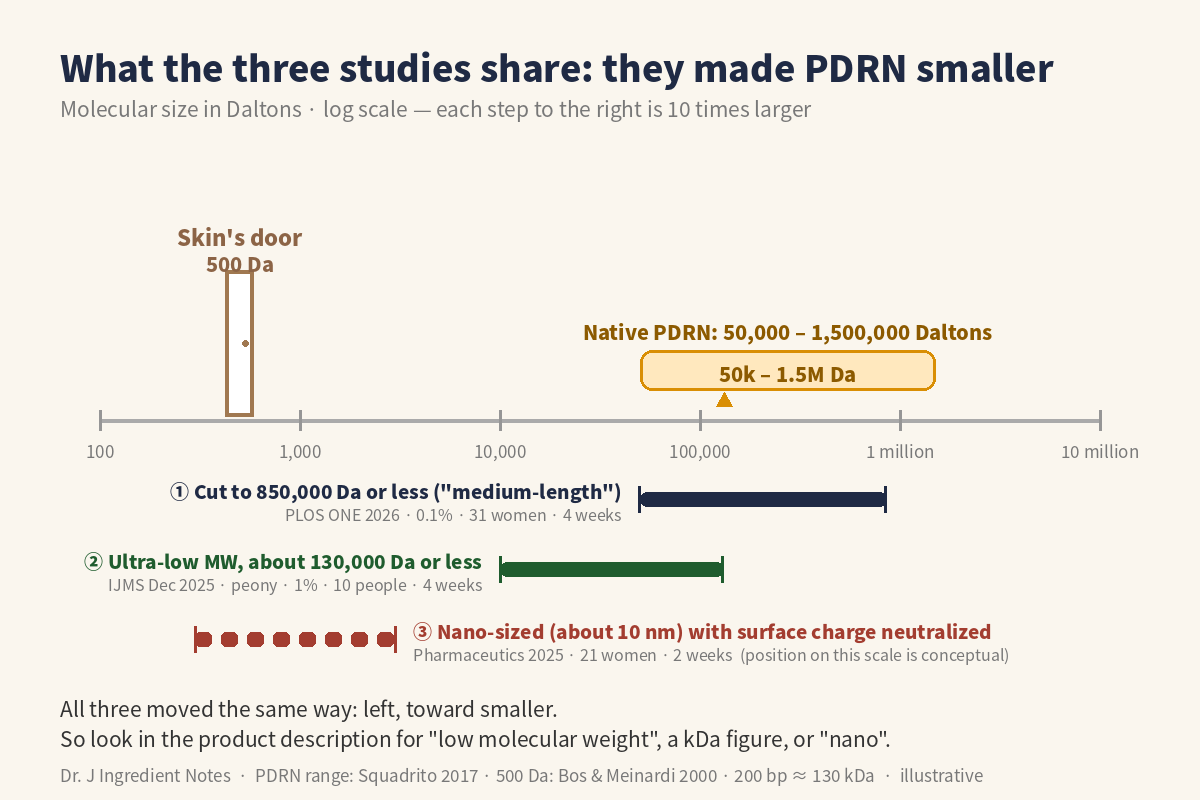
    PDRN molecular size compared – the 500 Dalton skin barrier and the smaller PDRN used in three studies

    Native PDRN is big: 50,000 to 1,500,000 Daltons. Skin lets molecules through on their own only up to about 500 Daltons, so PDRN left at its natural size mostly works at the surface. Now line up the three studies that showed results, and one thing jumps out: all three made the PDRN smaller.

    Study What they did to the PDRN Concentration · people · duration
    PLOS ONE 2026Cut to 850,000 Da or less (“medium-length”)0.1% · 31 · 4 weeks
    IJMS, Dec 2025Ultra-low molecular weight (about 130,000 Da or less), peony-derived1% · 10 · 4 weeks
    Pharmaceutics 2025Nano-sized to about 10 nm, surface charge neutralizednot disclosed · 21 · 2 weeks
    📌 What to look for on the product
    Any mention of size or delivery“low molecular weight,” a molecular-weight figure in kDa, “nano,” “liposome” – is a good sign. It tells you the brand knows that size is the point.
    One thing worth knowing: on the ingredient list, PDRN appears as “Sodium DNA” (or “Hydrolyzed DNA”), and that name reads the same whether the molecule was cut small or not. So size information lives in the product description, not the ingredient list.
     

    3. Condition 2 · Concentration – is it in the range the studies used?

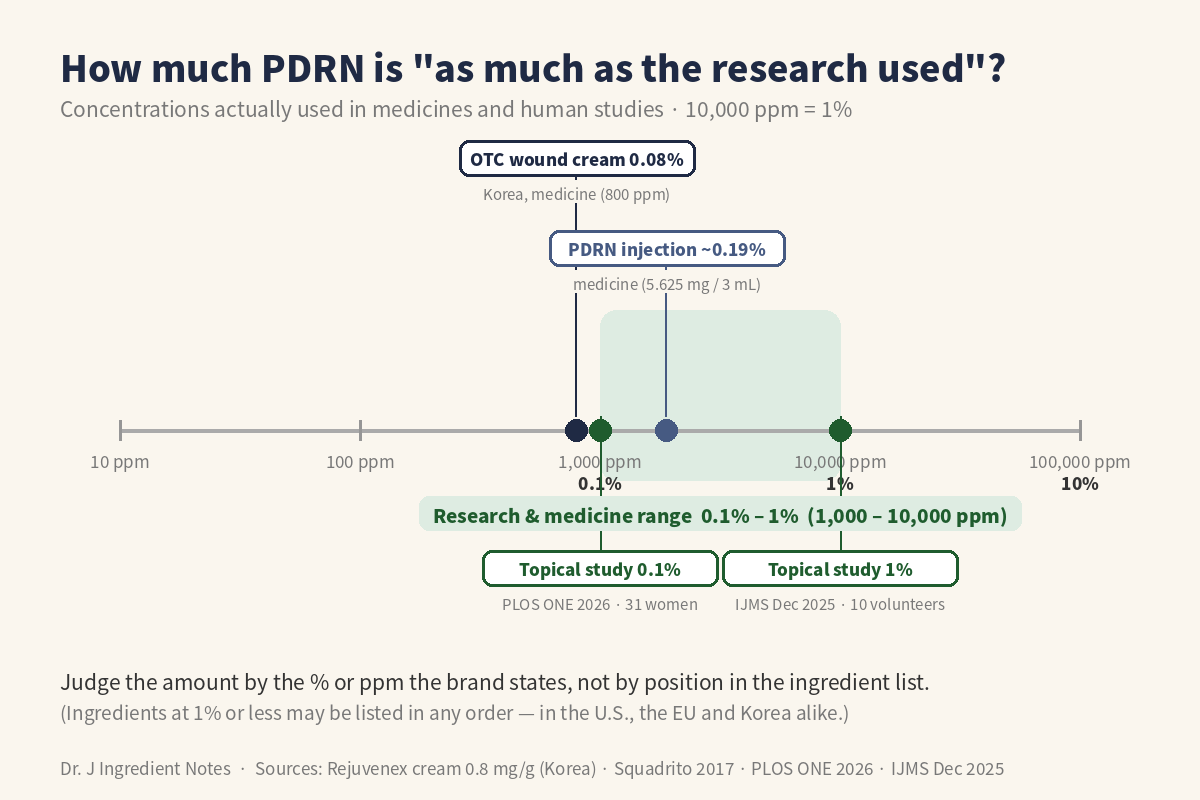
    PDRN concentration reference points – OTC wound cream 0.08%, injection 0.19%, topical studies 0.1 to 1%

    Every brand says it has “a lot.” You need a yardstick, and there are three good ones.

    · The over-the-counter PDRN wound cream sold in Korean pharmacies (a medicine): 0.08% (800 ppm)
    · The PDRN injection used in clinics (a medicine): about 0.19% (1,900 ppm)
    · The two topical studies that disclosed a dose: 0.1% (1,000 ppm) and 1% (10,000 ppm)

    So anything between 0.1% and 1% – 1,000 to 10,000 ppm – contains as much PDRN as the medicines and the studies did. The conversion is easy: 10,000 ppm = 1%, and 1,000 ppm = 0.1%. Korean brands often print ppm; Western brands, when they disclose at all, tend to use percent.

    Read the number the brand states – a % or ppm on the product page – rather than guessing from the ingredient list. In the U.S., the EU and Korea alike, only ingredients above 1% have to be listed in descending order; anything at 1% or less can go in any order. So a 1% PDRN – the same amount one of the studies used – can quite legitimately sit near the end of the list. If a brand states no number at all, it’s fair to ask them.


    4. Condition 3 · Source and purity – salmon, plant, or just “extract”?

    PDRN is traditionally extracted from the milt (reproductive cells) of salmon or trout, and a properly made raw material has its proteins removed and is purified to over 95%. That is the grade used in medicines and the one with the most research behind it, so think of it as the default choice.

    Lately, plant-derived PDRN has appeared too – from peony root, microalgae or yeast. The IJMS study in the table used peony PDRN. It isn’t the same molecule as salmon PDRN – it’s plant DNA cut into small pieces – but it showed improvements in elasticity and moisture recovery over four weeks, and it’s a good option if you’d rather avoid animal-derived ingredients.

    · “Sodium DNA” (or “Hydrolyzed DNA”) in the ingredient list → the product contains a DNA ingredient
    · Only a salmon extract – “Salmon Milt Extract,” “Salmon Egg Extract” or similar – with no Sodium DNA → a salmon-derived extract, not PDRN as such
    · Fish allergy → purified PDRN has had its proteins removed, so a direct link is unlikely; still, patch-test on the inner arm for two days before using it on your face
     

    5. Condition 4 · Companion ingredients – the supporting cast that makes hydration last

    As someone who formulates, this is the one I most want to say: a good PDRN cream doesn’t work with PDRN alone. DNA is a large, water-loving molecule – it holds moisture at the skin’s surface and forms a thin film – but what makes that hydration last is the humectants and barrier ingredients alongside it. That’s why the products with a strong rest-of-the-list are the ones people actually stay happy with.

    · Hydration and barrier: glycerin, hyaluronic acid, ceramides, panthenol, squalane – two or three of these high in the list is a good sign
    · Soothing: centella asiatica, madecassoside, allantoin – look for these if you want it for post-procedure or sensitive skin
    · If your skin is reactive: skip products with fragrance or essential oils high in the list, or alcohol (alcohol denat.) near the top
     

    6. Condition 5 · Label language – the calm brand is usually the trustworthy one

    As I covered in part one, a cosmetic cannot say “regenerates” or “treats” – not in Korea, not in the U.S. So a product that says hydrates, smooths, soothes and stops there is very often made by a brand that knows the rules. In my experience, the quiet label is frequently the better product.

    If you see these, the marketing has stepped past what a cosmetic can claim – worth a second look:
    · “Regenerates” – skin regeneration, regenerating cream or ampoule
    · “At-home Rejuran,” “instead of injections” – borrowing a clinic treatment’s name
    · “Boosts collagen by X%,” “absorbs into the dermis” – things a cream can’t demonstrate
     

    7. Use it the way the studies did

    · Apply right after cleansing, on slightly damp skin, then seal with your usual moisturizer. DNA is a water-binding ingredient, so this order gets the most out of it
    · All three studies looked at once or twice a day for two to four weeks. Give it that long, and watch for hydration, texture and glow
    · If you use it in the morning, sunscreen is non-negotiable – UV protection is what protects the value of every ingredient you put on (earlier post on sunscreen ingredients)
    · After a laser or a peel, your clinic’s instructions come first
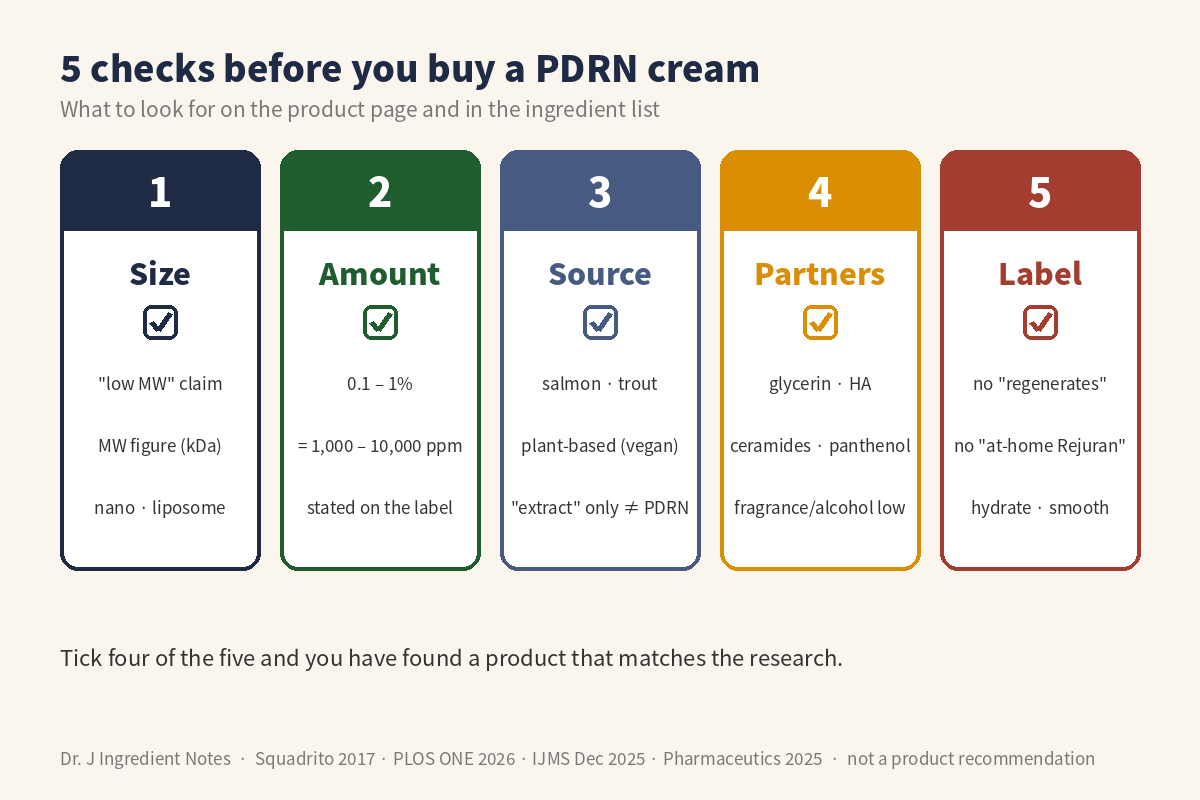
    Five-point checklist card before buying a PDRN cream
    Before you buy: 5 checks
    Size – does the product mention “low molecular weight,” a kDa figure, nano or liposome?
    Concentration – is it between 0.1% and 1% (1,000–10,000 ppm)?
    Source – salmon or trout (the default), or plant-based (the vegan option); “extract” alone isn’t PDRN
    Companions – are hydrating, barrier and soothing ingredients high in the list?
    Label – does it say hydrate, smooth, soothe – without “regenerates,” “at-home Rejuran” or “instead of injections”?
    The one-line takeaway
    Choose a PDRN cream by three questions: was it made smaller, does it contain as much as the research, and is the rest of the formula good?
    When all three line up, the two-to-four-week change the studies saw is a reasonable thing to expect on your own skin.

    ▶ Korean version of this post (한국어판): PDRN 크림, 제대로 고르는 5가지 조건 – 논문 세 편이 가리키는 방향
    ▶ Part one: PDRN (Salmon DNA) Skincare: What a Korean Bio PhD Wants You to Know
    ▶ Earlier: Korea Just Put a “Not for the Whole Body” Warning on Oxybenzone Sunscreens

    Next time: retinol. “Can I start retinol in my 50s?” – concentration, how to begin, and the combinations to avoid.
    Curious about an ingredient? Leave a comment and I’ll look up the research and explain it simply.

    Dr. J (MS in Veterinary Medicine · PhD in Life Sciences · former researcher, Korea Research Institute of Bioscience & Biotechnology · founder of a cosmetics manufacturing company)

    Sources
    1. Squadrito F et al. “Pharmacological Activity and Clinical Use of PDRN.” Frontiers in Pharmacology 2017;8:224 – PDRN 50–1,500 kDa (most abundant around 132 kDa), salmon/trout origin, purity above 95%, injectable 5.625 mg/3 mL.
    2. Bos JD, Meinardi MM. “The 500 Dalton rule for the skin penetration of chemical compounds and drugs.” Experimental Dermatology 2000;9:165-169.
    3. Ye R et al. “Topical medium-length PDRN enhances dermal extracellular matrix repair in photodamaged skin.” PLOS ONE 2026;21(7):e0350905 – PDRN of 850 kDa or less at 0.1%, 31 women, 4-week split-face vs retinol (cosmetics-company study).
    4. “Anti-Aging Efficacy of Low-Molecular-Weight Polydeoxyribonucleotide Derived from Paeonia lactiflora.” International Journal of Molecular Sciences 2026;27(1):220 (published Dec 2025) – peony PDRN under 200 bp (about 130 kDa), 1%, 10 volunteers, 4 weeks, eye-area elasticity +4.25% (ingredient-supplier study).
    5. “Plasma-Engineered PDRN: Surface Charge Neutralization and Nanosizing Enhance Uptake and Regeneration Potential.” Pharmaceutics 2025;17(9):1136 – nano-sized PDRN of about 10 nm, 21 Korean women (mean age 58), 2 weeks, reduced roughness and increased gloss (university–industry study).
    6. Korea Pharmaceutical Information Center – Rejuvenex Cream (PDRN sodium 0.8 mg/g, OTC; indication: wounds and tissue nutrition).
    7. Korea Cosmetic Association ingredient dictionary – Sodium DNA, function: skin conditioning. U.S. FDA, 21 CFR 701.3 – ingredients at 1% or less may be listed in any order after those above 1%.
    ※ This article is general information about cosmetic ingredients, not medical advice. Results vary with individual skin. It does not recommend or criticize any specific product. The author runs a company that manufactures PDRN-containing cosmetics.
  • PDRN (Salmon DNA) Skincare: What a Korean Bio PhD Wants You to Know

    Salmon DNA (PDRN) skincare – Korea flagged 106 misleading ads, cover

    🇰🇷 이 글의 한국어판 → Korean version (한국어)

    Hello, I’m Dr. J. I formulate skincare products in Korea.
    If you’ve shopped for K-beauty this year, you’ve seen the words “salmon DNA” or “PDRN” on a serum, an ampoule, a sheet mask – probably all three. It’s one of the fastest-growing ingredient trends to come out of Korea, and it’s now filling U.S. shelves and feeds.
    Here’s something you probably haven’t seen: what Korea’s own regulator said about it this summer.

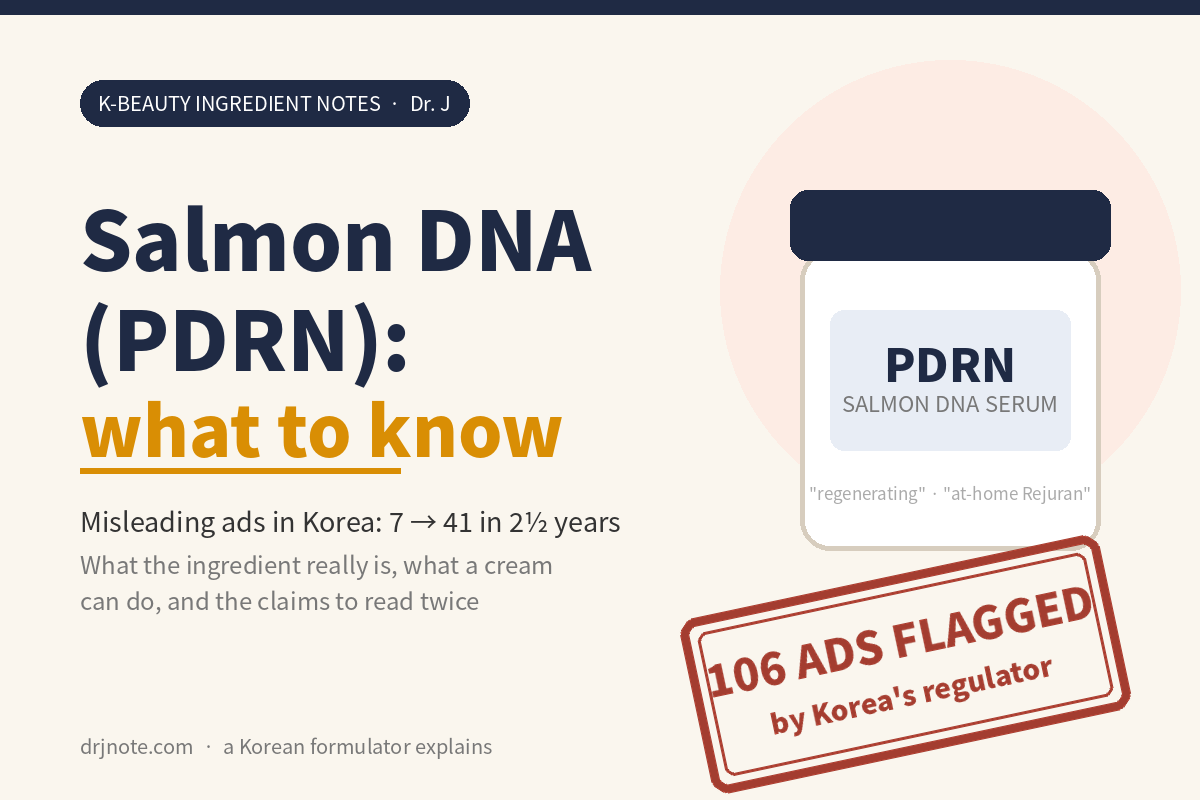
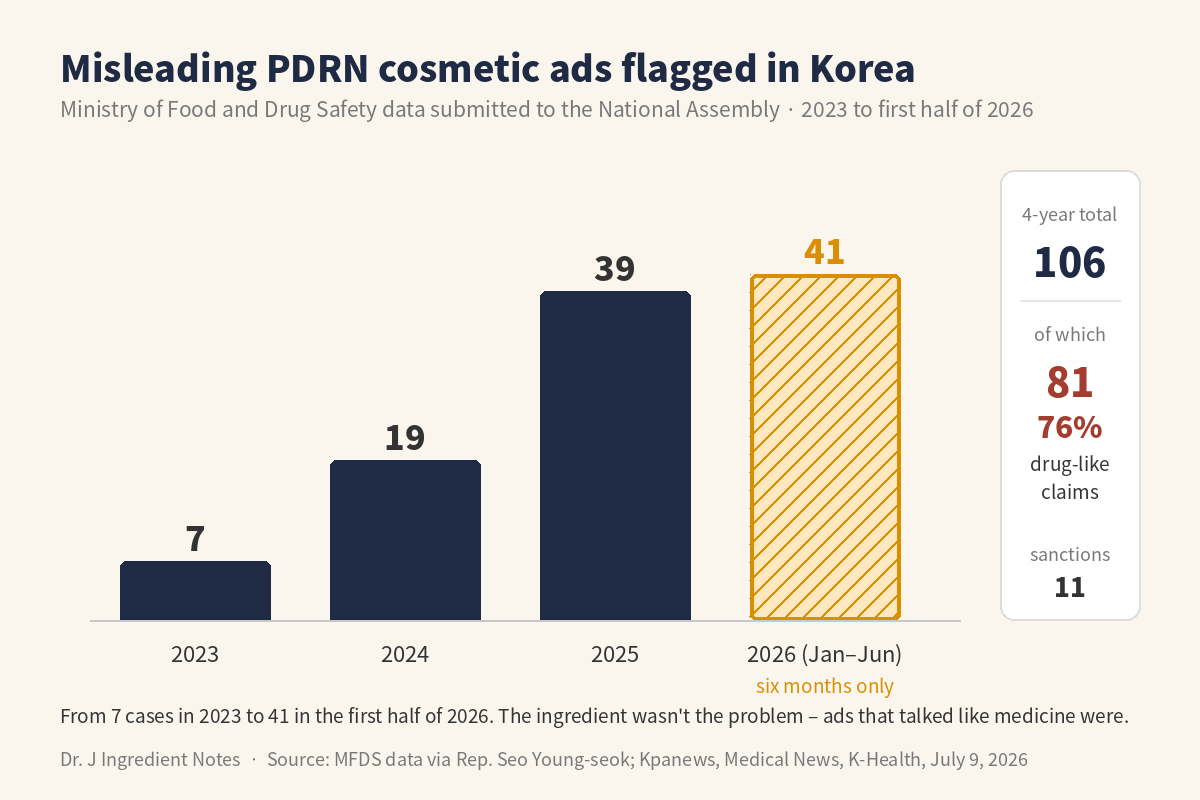
    Misleading PDRN cosmetic ads flagged in Korea: 7 in 2023 → 41 in the first half of 2026 alone.
    That’s a six-fold jump in two and a half years. Of 106 cases in total, 81 (76%) were ads that made a cosmetic sound like a medicine.

    I want to be clear about what this does and doesn’t mean. It isn’t a verdict on the ingredient. PDRN is a good, well-studied molecule with a real medical history. The problem is that its name carries so much weight that the marketing ran ahead of what a cream can honestly claim.
    So today, three things from a formulator’s chair: what PDRN actually is, why the clinic injection and the jar on your shelf are different products, and which phrases deserve a second look.

    One disclosure first: my company makes PDRN products too. That’s exactly why I’d rather you understand the ingredient than buy it on hype – including ours.


    The three-line version

    ✔ PDRN is DNA from salmon or trout, cut into small fragments. It started life as a prescription wound-healing drug, not a cosmetic
    An injection places it in the dermis; a cream works at the skin’s surface. Same name, different jobs
    ✔ A well-made cream can give you hydration, smoother texture and comfort – and if an ad says “regenerates,” “replaces injections” or “at-home Rejuran,” read it twice
     

    1. What PDRN actually is

    PDRN stands for polydeoxyribonucleotide. Strip the chemistry away and it means “DNA cut into small pieces.” The DNA is extracted from the milt (reproductive cells) of salmon or trout, because its structure is close enough to human DNA that the body doesn’t treat it as foreign. That’s where the nickname “salmon DNA” comes from.

    What matters most is its origin story. PDRN was born as a drug. It has been used in Italy since the 1950s as an injectable for wound healing, and in Korea both an injectable and an over-the-counter wound cream (0.08% PDRN) are approved as medicines for wounds and tissue nutrition.
    The famous “salmon injections” you see in Korean clinics (Rejuran and similar) use a close cousin called PN (polynucleotide) – longer DNA chains – approved in Korea as a medical device and placed directly into the dermis by a doctor. As of mid-2026, that injectable is not FDA-approved in the United States.

    📌 In one line
    PDRN became famous as a wound drug, then a clinic treatment – and cosmetics were the last to arrive, riding on that reputation. That is why the ads keep drifting toward medical language.
     

    2. What Korea’s regulator flagged

    Misleading PDRN cosmetic ads flagged by Korea's MFDS, 2023 to first half of 2026

    According to data Korea’s Ministry of Food and Drug Safety (MFDS) submitted to the National Assembly in July 2026, misleading PDRN cosmetic ads went from 7 cases in 2023 to 19 in 2024, 39 in 2025, and 41 in just the first six months of 2026. Of the 106 cases, 81 were classified as “likely to be mistaken for a medicine.” Eleven companies received formal sanctions – typically a three- to four-month advertising ban.

    The phrases that got companies into trouble looked like this:

    · “Skin regeneration,” “regenerating skin booster”
    · “Removes melanin” – on a product with no approved brightening claim
    · “Exosomes and PDRN work in synergy to regenerate and firm”
    · Claims that the product penetrates deep into the dermis

    In Korea – as in the U.S. – a cosmetic cannot claim to regenerate, treat or cure. Those words belong to drugs and medical devices. The trouble with PDRN is that the ingredient’s name is a drug’s name: put it on a cream and the copy slides toward “medicine” almost by itself. One lawmaker put it bluntly: the ingredient name alone leads consumers to expect drug-level results.

    Speaking as someone who makes these products: PDRN is an expensive raw material used in small amounts, with an outsized reputation. That combination tempts marketers. Knowing a handful of phrases – section 4 below – is enough to keep that temptation from working on you.


    3. Injection and cream: same ingredient, different address

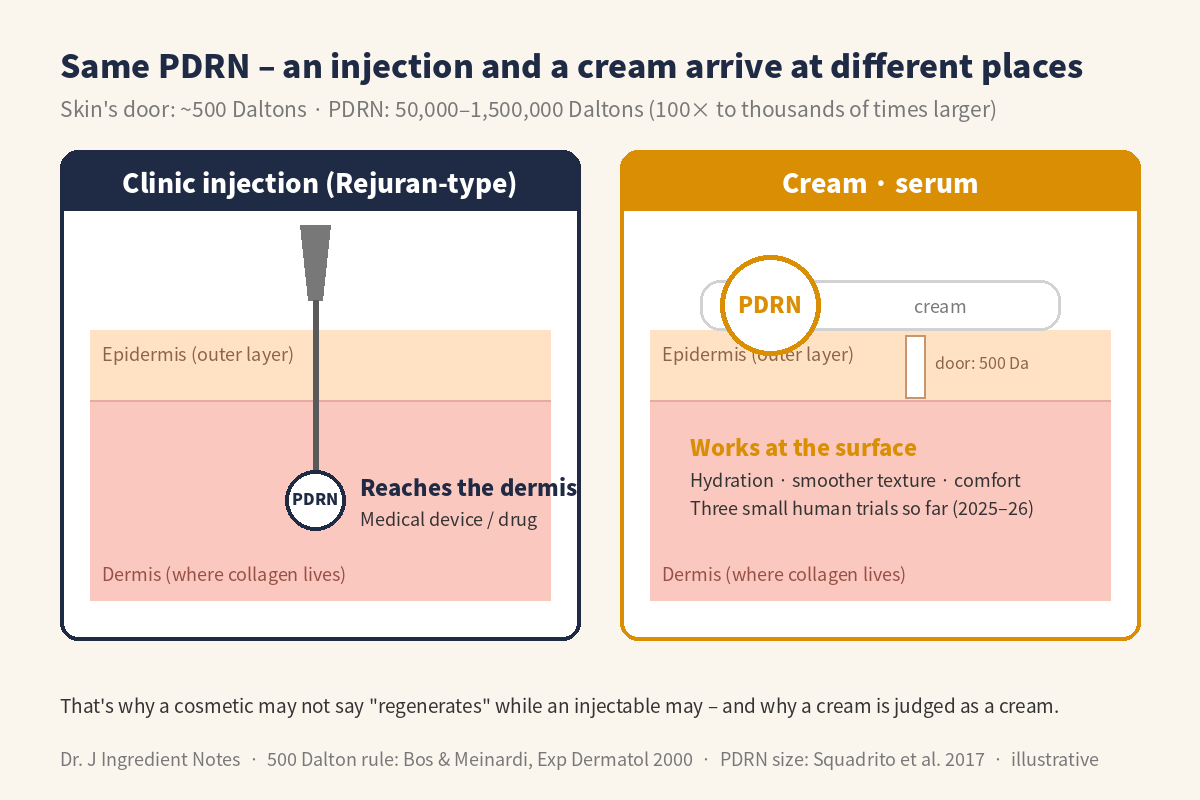
    PDRN injection vs cream – the 500 Dalton skin barrier and where each one works

    Your skin is a wall built to keep things out, so anything applied on top has to be very small to pass through on its own. Dermatology has a long-standing rule of thumb for this – the “500 Dalton rule”: molecules heavier than about 500 Daltons don’t readily cross intact skin. It’s the same reason hyaluronic acid sits on the surface.

    PDRN weighs 50,000 to 1,500,000 Daltons – a hundred to several thousand times the size of that door. That’s why clinics inject it into the dermis, and why the clinical studies behind the injections exist: the ingredient is delivered to where the work happens.

    Clinic injection (Rejuran-type) Cream / serum
    Regulated asMedical device / drugCosmetic
    Where it worksDermisSkin surface
    What the research showsTexture and elasticity (several trials)Hydration, smoother texture, comfort (three small trials, 2025–2026)
    Allowed to say“Regenerate,” “treat”“Hydrate,” “smooth,” “soothe”

    So what does a cream do? Quite a lot, at the surface. DNA is a large, water-loving molecule: it holds moisture on the skin and forms a thin, breathable film, so skin feels hydrated, smoother and calmer – much like hyaluronic acid does. And the research on topical PDRN is starting to catch up: three small human studies published in 2025–2026 reported less roughness and more glow in two weeks, better eye-area elasticity and faster moisture recovery in four weeks, and in one 31-person split-face study, eye-wrinkle improvement ahead of retinol. They’re small and mostly company-run, so I read them as “promising,” not “proven” – but they point the same way.

    What that means for you
    If your skin is dry, sensitive, or recovering from a laser or peel, or if you’re past 50 and your texture has gone rough and dull, a well-made PDRN cream is a reasonable thing to try – for hydration, smoothness and comfort. Judge it by those, over two to four weeks, which is the window the studies used.
     

    4. Four phrases worth a second look

    None of these means a product is bad. They mean the marketing has stepped past what a cosmetic can claim – which tells you something about who wrote it.

    · “Regenerates” – skin regeneration, regenerating cream or ampoule
    · “At-home Rejuran,” “instead of injections” – borrowing a clinic treatment’s name
    · “Boosts collagen by X%,” “reaches the dermis” – things a cream can’t demonstrate
    · “Removes melanin,” “treats wrinkles” – drug claims on a cosmetic

    The flip side is worth knowing too: a brand that says “hydrates,” “smooths,” “soothes” – and stops there – is usually the one that knows the rules. In my experience the quiet label is often the better product.


    5. A note for U.S. shoppers

    On an American label, PDRN won’t appear by that name. Look in the ingredient list for “Sodium DNA” or “Hydrolyzed DNA” – that’s the official INCI name. If you only see “Salmon Milt Extract” or “Salmon Egg Extract,” the product contains a salmon-derived extract but not PDRN as such.
    The same name covers everything from finely cut PDRN to plain salmon DNA, so size and concentration matter more than the word on the front. That’s the whole of my next post: how to read a PDRN product and choose one that matches the research.

    The one-line takeaway
    A PDRN cream is not a salmon injection in a jar – it’s a very good hydrating cream with a serious ingredient behind it.
    Expect hydration, smoothness and comfort; look for size and concentration on the label; and when an ad says “regenerates,” read it twice.

    ▶ Korean version of this post (한국어판): PDRN 크림 광고, 왜 자꾸 적발될까 – 주사와 크림이 다른 이유
    ▶ Earlier: Korea Just Put a “Not for the Whole Body” Warning on Oxybenzone Sunscreens
    ▶ Earlier: Dull, Rough Skin? Glycolic Acid (AHA) – What the Research Shows
    ▶ Earlier: Not All Vitamin C Serums Work – 3 Conditions the Research Says You Need

    Next time, part two: How to Choose a PDRN Cream – 5 Conditions from the Research. Molecular size, concentration, source, companion ingredients and label language – with the three human studies laid side by side.
    Curious about an ingredient? Leave a comment and I’ll look up the research and explain it simply.

    Dr. J (MS in Veterinary Medicine · PhD in Life Sciences · former researcher, Korea Research Institute of Bioscience & Biotechnology · founder of a cosmetics manufacturing company)

    Sources
    1. Korea MFDS data submitted to the National Assembly (Rep. Seo Young-seok), reported by Kpanews, Medical News (의학신문) and K-Health, July 9, 2026 – 7 / 19 / 39 / 41 cases (2023–H1 2026), 106 total, 81 (76.4%) drug-like claims, 11 sanctions.
    2. Bos JD, Meinardi MM. “The 500 Dalton rule for the skin penetration of chemical compounds and drugs.” Experimental Dermatology 2000;9:165-169.
    3. Squadrito F et al. “Pharmacological Activity and Clinical Use of PDRN.” Frontiers in Pharmacology 2017;8:224 – PDRN 50–1,500 kDa, salmon/trout origin, injectable 5.625 mg/3 mL.
    4. Ye R et al. “Topical medium-length PDRN enhances dermal extracellular matrix repair in photodamaged skin.” PLOS ONE 2026;21(7):e0350905 – 0.1% PDRN, 31 women, 4-week split-face vs retinol (industry study).
    5. International Journal of Molecular Sciences 2026;27(1):220 – low-molecular-weight PDRN 1%, 10 volunteers, 4 weeks; Pharmaceutics 2025;17(9):1136 – nano-sized PDRN, 21 Korean women (mean age 58), 2 weeks.
    6. Korea Pharmaceutical Information Center – Rejuvenex Cream (PDRN sodium 0.8 mg/g, OTC, indication: wounds and tissue nutrition). Rejuran U.S. status: no FDA authorization identified as of July 2026 (clinic and industry reports).
    ※ This article is general information about cosmetic ingredients, not medical advice. Results vary with individual skin. The author runs a company that manufactures PDRN-containing cosmetics.
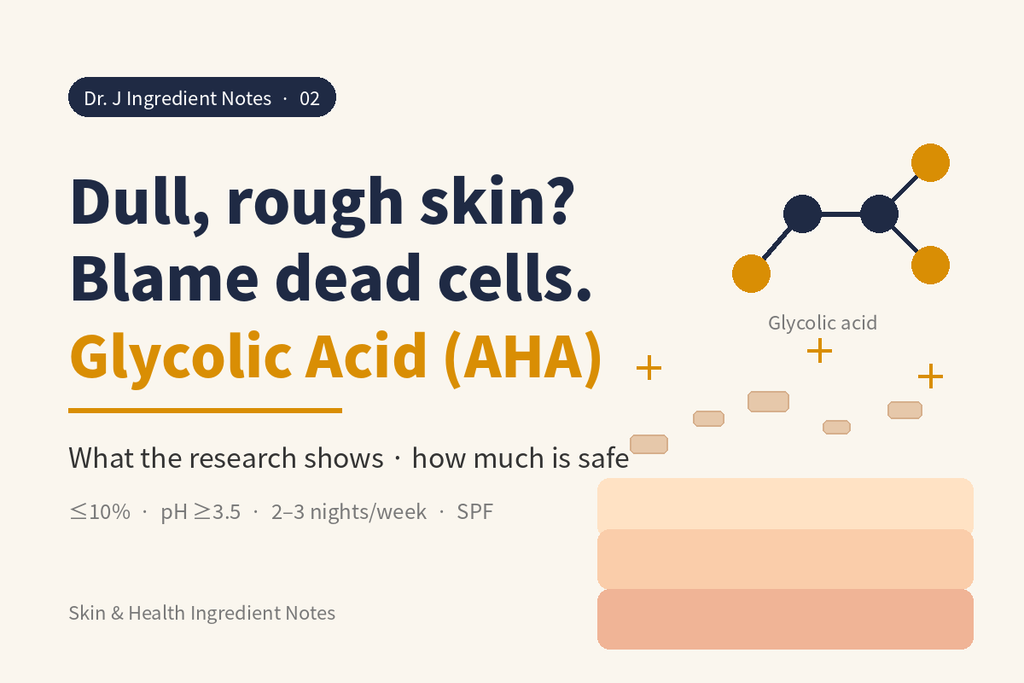
  • Dull, Rough Skin? Glycolic Acid (AHA) – What the Research Shows and How Much Is Safe

    Hello, I’m Dr. J.
    Does your skin look duller than it used to, feel rough to the touch, and make foundation sit unevenly?
    That’s not just age. Very often it’s because dead skin cells aren’t shedding on time.

    Today’s ingredient is the benchmark for exfoliation: glycolic acid – the best-studied of the AHAs (alpha hydroxy acids).
    I’ll walk you through two published studies and the safety standards used in the US and Korea.


    1. Why does skin get duller with age?

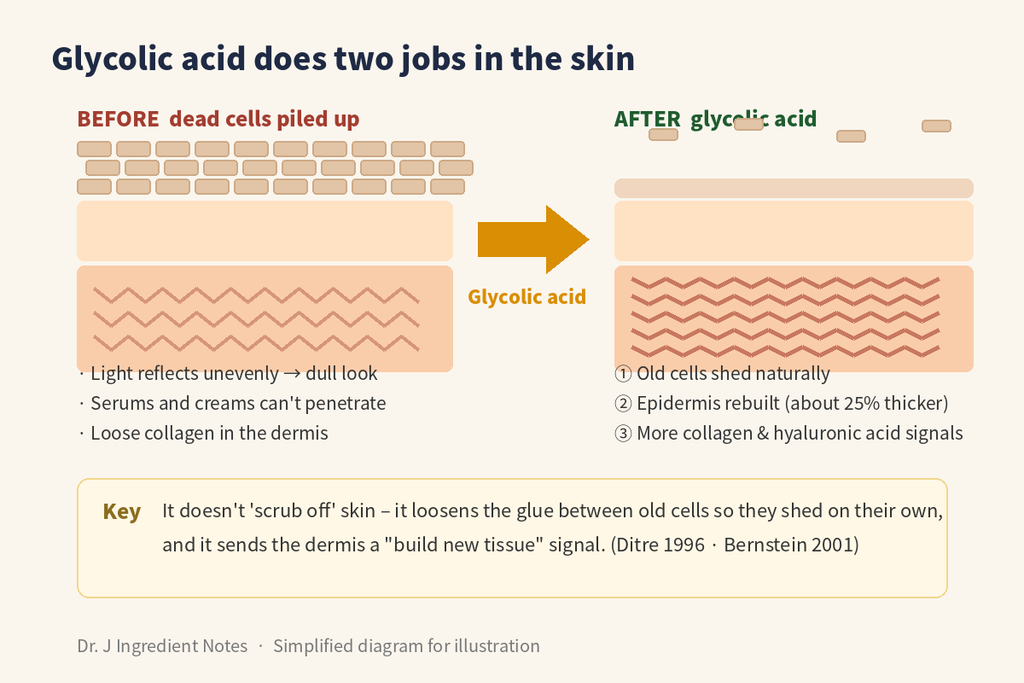
    The outermost layer of your skin – the stratum corneum – normally renews itself about every 4 weeks.
    With age this cycle slows down, so old cells pile up on the surface.

    When dead cells build up
    · light reflects unevenly, so skin looks dull
    · the surface gets bumpy, so makeup cakes and separates
    · serums and creams can’t penetrate properly.

    Glycolic acid loosens the “glue” holding those old cells together, so they shed naturally.
    It has the smallest molecule of any AHA, which is why it penetrates well – and why it’s the most thoroughly researched.


    2. What did the studies find?

    Two studies show that glycolic acid is far more than a “surface scrub.”

    📌 Study ① – Skin tissue after about 6 months
    Volunteers with sun-damaged skin applied an AHA lotion (glycolic acid and others) for about 6 months, then had skin biopsies taken.
    · The epidermis became about 25% thicker (thinned skin was rebuilt)
    · Denser collagen in the dermis, with healthier elastic fibers
    · No signs of inflammation

    Source: Ditre CM et al., Journal of the American Academy of Dermatology, 1996;34:187-195.

    📌 Study ② – What increased inside the skin
    A 20% glycolic acid lotion was applied to the inner forearm twice a day for 3 months, with a plain lotion on the other arm for comparison.
    · Higher activity of the gene that makes collagen
    · More hyaluronic acid (the skin’s own water-holding molecule)
    → Glycolic acid doesn’t just clear the surface – it sends the dermis a “build new tissue” signal.

    Source: Bernstein EF et al., Dermatologic Surgery, 2001;27:429-433.

    ⚠ Please note
    The 20–25% used in these studies is professional, clinic-level strength. Products for daily home use are made at much lower concentrations – and that’s what keeps them safe. The studies show the direction of the effect, not a concentration for you to copy.
     

    3. So how much is safe at home?

    Fortunately this is well defined – and the US and Korea use the same numbers.

    ① Concentration 10% or less + ② pH 3.5 or higher
    These are the conditions the US Cosmetic Ingredient Review (CIR) panel set for products that are “safe for consumer use.”

    ③ The Korean standard
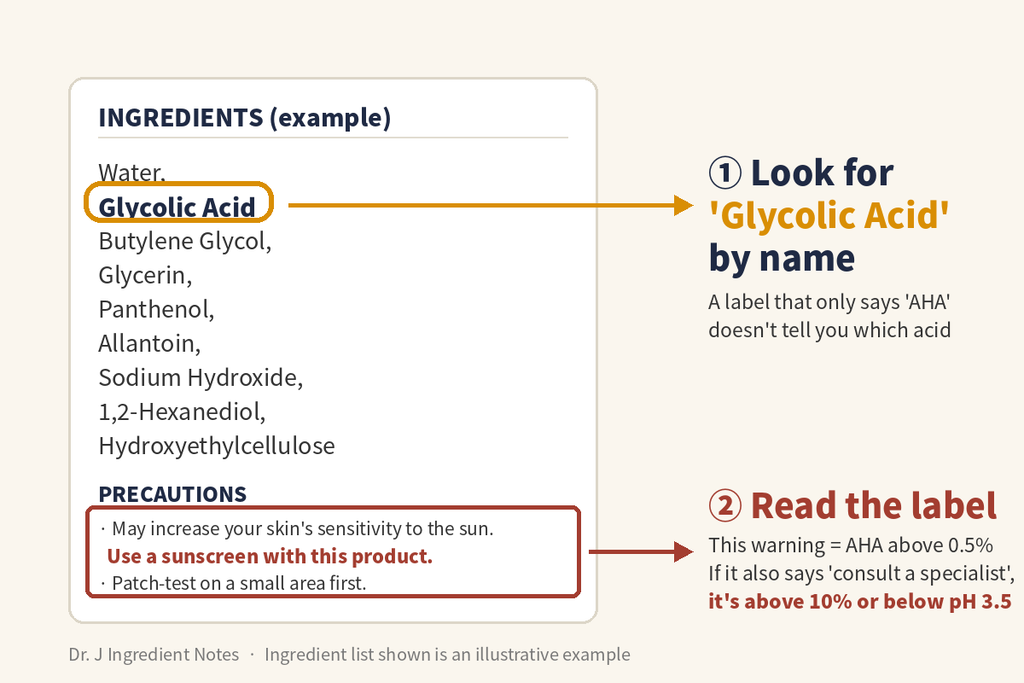
    Korea’s cosmetics regulations require products above 10% or below pH 3.5 to carry a “consult a specialist” warning. Any AHA product above 0.5% must also state “use a sunscreen with this product.”

    One thing I’d add as a formulator: at the same percentage, a lower pH acts more strongly, because more of the acid is in its “active” form. So don’t judge gentleness by the percentage alone. When you’re starting out, a good rule of thumb is a product whose tingle fades within 30 seconds.


    4. Three things to check before you buy

    ✔ “Glycolic Acid” is named in the ingredient list – a label that only says “AHA” doesn’t tell you which acid you’re getting
    ✔ Start at 5–8% – 5% if you’re new, up to 8–10% once your skin is used to it
    ✔ Soothing ingredients alongside – panthenol, allantoin or madecassoside on the label mean less irritation
     

    5. How to use it

    · At night, after cleansing and drying, at the toner step
    · Twice a week for the first 2 weeks, then up to 3 times – daily use isn’t recommended
    · Not on the same night as vitamin C or retinol – the irritation adds up (e.g. glycolic acid Mon & Thu, vitamin C on other days)
    · Sunscreen the next morning is a must – freshly exfoliated skin is more sun-sensitive
    · If redness lasts more than a day, stop and focus on moisturizing
    · Thin or sensitive skin? Lactic acid or a PHA is a gentler alternative

    The one-line takeaway
    Glycolic acid clears old surface cells and tells the dermis to rebuild – with solid evidence behind it.
    At home, stick to 10% or less · pH 3.5 or higher · 2–3 nights a week · sunscreen the next day.

    Vitamin C (last article) and glycolic acid (this one) shouldn’t be used on the same night. Next time I’ll lay out a simple weekly schedule for combining them – plus retinol.
    Curious about an ingredient? Leave a comment and I’ll look up the research and explain it simply.

    Dr. J (MS in Veterinary Medicine · PhD in Life Sciences · former researcher, Korea Research Institute of Bioscience & Biotechnology · founder of a cosmetics manufacturing company)

    References
    1. Ditre CM, Griffin TD, Murphy GF, et al. Effects of alpha-hydroxy acids on photoaged skin: a pilot clinical, histologic, and ultrastructural study. J Am Acad Dermatol. 1996;34(2):187-195.
    2. Bernstein EF, Lee J, Brown DB, Yu R, Van Scott E. Glycolic acid treatment increases type I collagen mRNA and hyaluronic acid content of human skin. Dermatol Surg. 2001;27(5):429-433.
    3. U.S. FDA, Alpha Hydroxy Acids – CIR safety conclusion (≤10%, pH ≥3.5).
    4. Enforcement Rule of the Cosmetics Act (Korea), Annex 3 – precautions for products containing alpha-hydroxy acids.
    ※ This article is for general information only. Results vary with individual skin conditions.
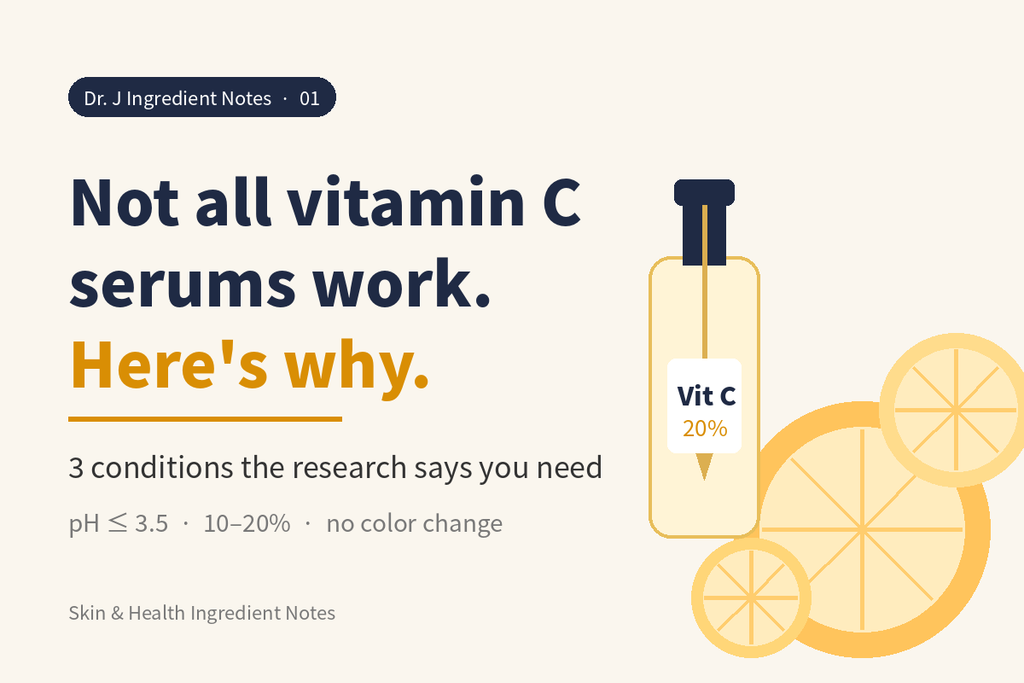
  • Not All Vitamin C Serums Work – 3 Conditions the Research Says You Need

    Hello, I’m Dr. J.
    As someone who formulates skincare products, this is the question I hear most often:
    “Do vitamin C serums actually work? And which one should I buy?”

    The answer is “Yes – but only under certain conditions.”
    Today I’ll skip the marketing language and walk you through what two published studies actually found – in plain terms.


    1. What does vitamin C do in your skin?

    Vitamin C (its proper name is L-ascorbic acid) does three jobs in the skin.

    ① Builds collagen — the enzymes that make collagen cannot work without it.
    ② Defends against sun damage — a powerful antioxidant that slows skin aging.
    ③ Fades dark spots — it interrupts the process that produces melanin pigment.

    The problem: skin loses vitamin C as we age.
    That’s why applying it topically matters more after 50.


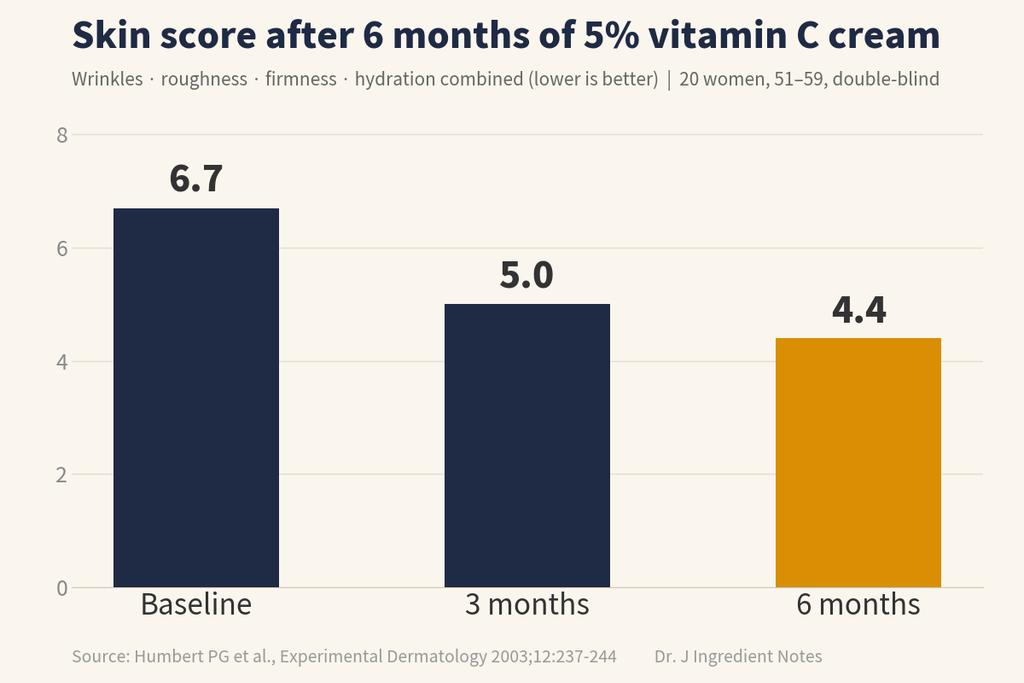
    2. A 6-month study in 20 women in their 50s

    A French research team asked 20 women aged 51 to 59 to apply a 5% vitamin C cream to one side of the face and a placebo cream to the other, every day for 6 months. Neither the women nor the doctors knew which side was which – a double-blind trial.

    📌 Results
    · The overall skin score (wrinkles, roughness, firmness) improved from 6.7 to 4.4 (lower is better)
    · Deep wrinkles were reduced and skin texture became smoother
    · Biopsies showed more healthy elastic fibers in the treated skin

    Source: Humbert PG et al., Experimental Dermatology, 2003;12:237-244.


    3. But not just any vitamin C will do

    Dr. Sheldon Pinnell’s team at Duke University tested the conditions under which vitamin C actually gets into the skin. The findings were very clear.

    ① It only absorbs at a pH of 3.5 or lower.
    ② 20% is the ceiling — higher concentrations actually absorbed less.
    ③ Skin levels saturate after 3 days of daily use, then stay elevated for about 4 days.
    ④ “Stabilized” derivatives (such as magnesium ascorbyl phosphate) did not raise vitamin C levels in the skin.

    Source: Pinnell SR et al., Dermatologic Surgery, 2001;27:137-142.

    From a formulator’s point of view, here’s the catch: pure vitamin C oxidizes easily when exposed to water and air. If your serum has turned yellow or brown, much of its power is already gone. That’s why many products use more stable derivatives. As the study shows, the pure form wins on absorption – but the two simply have different trade-offs; neither is “bad.”


    4. Three things to check before you buy

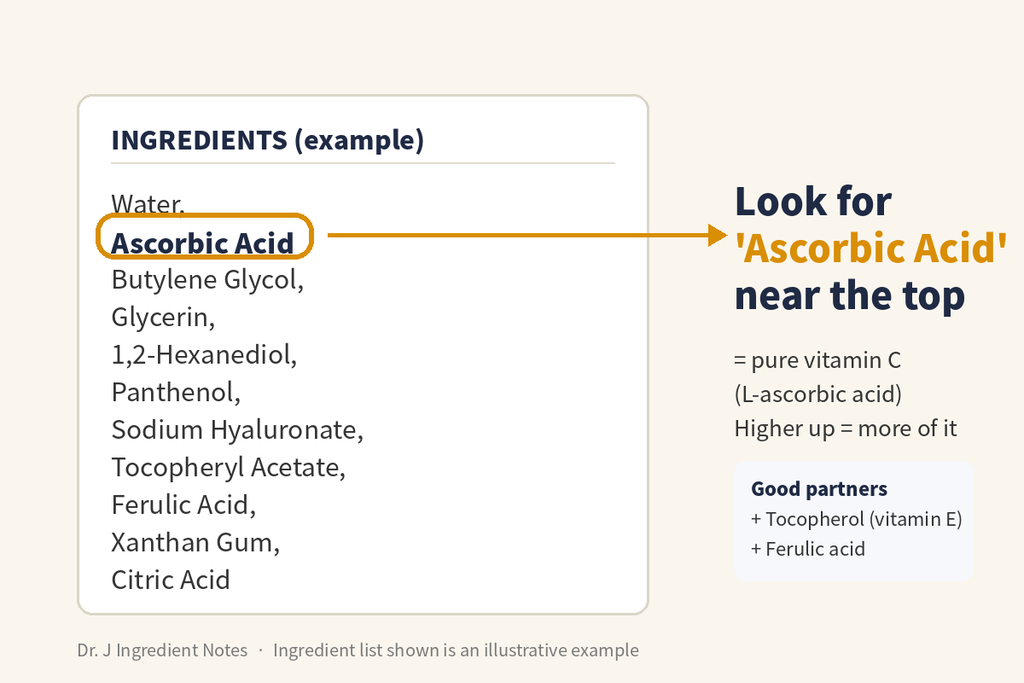
    ✔ “Ascorbic Acid” appears near the top of the ingredient list (that’s the pure form)
    ✔ Concentration between 10% and 20% (start at 10% if you’re new to it)
    ✔ Dark or opaque bottle, in a size you’ll finish within 3 months of opening
     

    5. How to use it

    · In the morning, after cleansing and toner – 2 to 3 drops
    · Follow with sunscreen – the two protect better together
    · A slight tingle at first is normal. If redness lasts more than a few days, drop to a lower concentration
    · Using retinol too? Keep it simple: vitamin C in the morning, retinol at night

    The one-line takeaway
    Vitamin C is one of the few ingredients with 6-month clinical evidence in skin over 50.
    But you only get that benefit with the pure form · the right concentration · a serum that hasn’t changed color.

    Next time, I’ll cover which ingredients pair well with vitamin C – and which combinations to avoid.
    Curious about an ingredient? Leave a comment and I’ll look up the research and explain it simply.

    Dr. J (MS in Veterinary Medicine · PhD in Life Sciences · former researcher, Korea Research Institute of Bioscience & Biotechnology · founder of a cosmetics manufacturing company)

    References
    1. Humbert PG, Haftek M, Creidi P, et al. Topical ascorbic acid on photoaged skin. Clinical, topographical and ultrastructural evaluation: double-blind study vs. placebo. Experimental Dermatology. 2003;12(3):237-244.
    2. Pinnell SR, Yang H, Omar M, et al. Topical L-ascorbic acid: percutaneous absorption studies. Dermatologic Surgery. 2001;27(2):137-142.
    ※ This article is for general information only. Results vary with individual skin conditions.