🇰🇷 한국어판: 가을 피부 건조, 계절 연구가 보여 준 것 (가을 특집 2)
Hello, this is Dr. J. Autumn is when the shelf gets rearranged — a heavier cream, a richer cleanser, something for the flaking. Before changing anything, it is worth asking a narrower question: what does the season actually change in skin, and what does it leave alone?
Three studies measured exactly that in Korean skin, in Korea. Two followed people across the seasons; one looked at a single heated day indoors. Read together they draw a fairly clear line between the measures that move and the measures that do not.
That line is the useful part, because it tells you which half of your routine the season is arguing with.
――――――――――――――――――――――――――――
The studies, if you would rather read them first
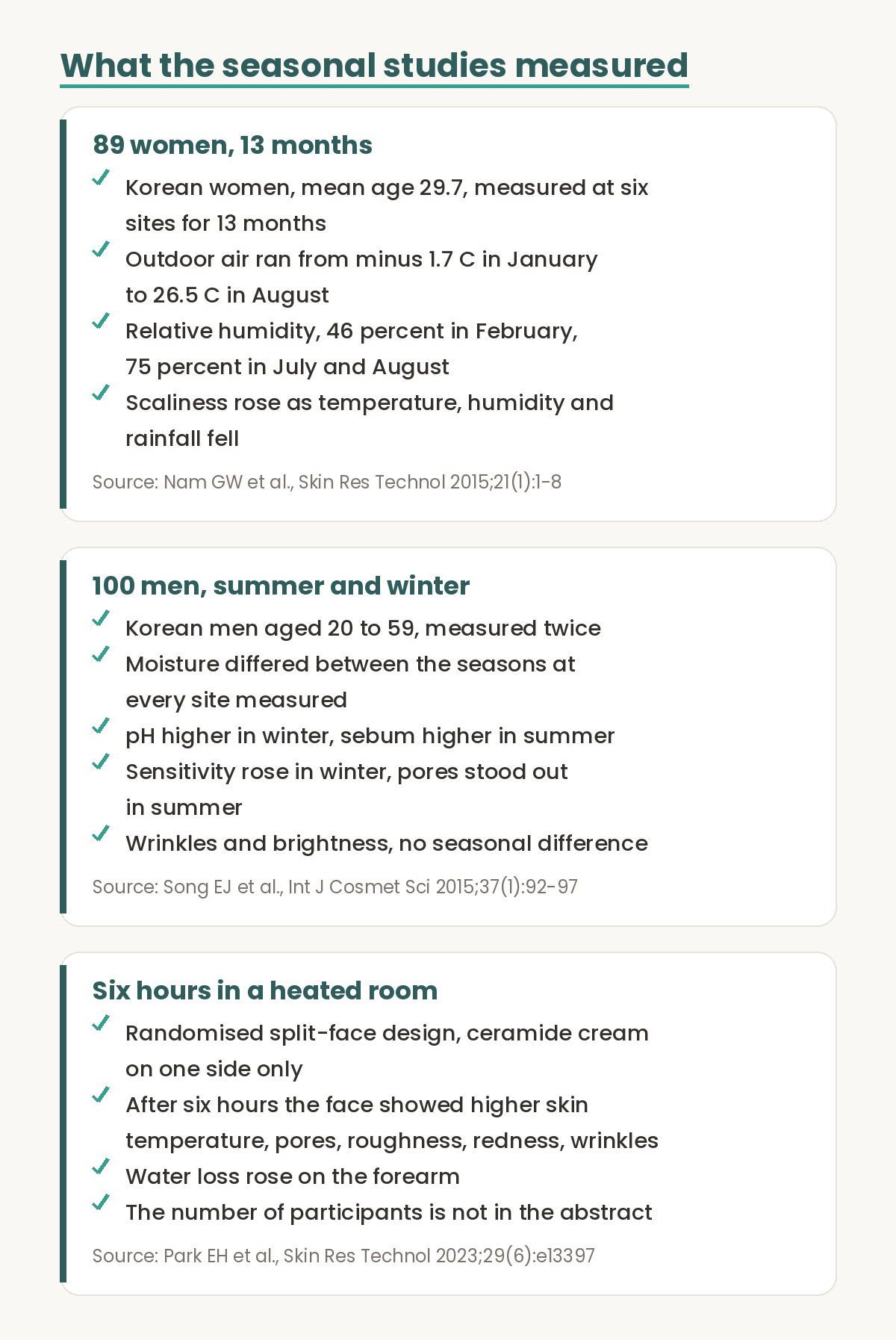
📄 Nam GW et al., Skin Res Technol 2015;21(1):1-8 — 89 Korean women, 13 months
📄 Song EJ et al., Int J Cosmet Sci 2015;37(1):92-97 — 100 Korean men, summer and winter
📄 Park EH et al., Skin Res Technol 2023;29(6):e13397 — six hours in a heated room
All three were carried out in Korea on Korean participants. Seasonal work travels badly between climates, so that is the ground this article stands on.
――――――――――――――――――――――――――――
――――――――――――――――――――――――――――
Five lines, if you are in a hurry
✔ Over 13 months, scaliness rose as temperature, humidity and rainfall fell
✔ Outdoor relative humidity in that period ran from 46% in February to 75% in July and August
✔ In 100 men measured twice, moisture differed between summer and winter at every site
✔ Six hours in a heated room raised facial roughness and redness, and water loss on the forearm
✔ Wrinkles and brightness did not change with the season — which is where this article turns
――――――――――――――――――――――――――――
Three studies, three designs
The three were built differently, and that is a strength rather than a weakness: one followed the same people for over a year, one sampled two seasons, and one watched a single day indoors.
| Study | Who | How long | Where measured |
|---|---|---|---|
| Nam et al. 2015 Skin Res Technol |
89 Korean women mean age 29.7 |
13 months, continuously | Forehead, under-eye, front cheek, eye corner, side cheek, inner forearm — six sites |
| Song et al. 2015 Int J Cosmet Sci |
100 Korean men aged 20 to 59 |
Summer and winter, once each | Forehead, cheek, arm, glabella, nose wing, eye corner |
| Park et al. 2023 Skin Res Technol |
Participant number not given in the abstract | Heated indoor room, over 6 hours a day | Face (randomised split-face) and forearm |
――――――――――――――――――――――――――――
Thirteen months of measurements
The first study tracked 89 women and set their skin measurements beside the weather of the same period — temperature, humidity, atmospheric pressure, hours of sunshine and rainfall. That is what makes it more useful than a general statement that winter is drying.
| Outdoor conditions measured | Lowest | Highest |
|---|---|---|
| Temperature | −1.7 °C in January | 26.5 °C in August |
| Relative humidity | 46% in February | 75% in July and August |
Across the year that is a span of roughly 28 degrees and 29 percentage points of humidity. And the findings followed those curves:
✔ Scaliness rose as temperature, humidity and rainfall fell, and moved the opposite way to atmospheric pressure and sunshine hours
✔ Elasticity was higher when temperatures were higher
Autumn sits on the downslope of the humidity curve rather than at its bottom. February is the low point, but the descent begins months earlier — which is why flaking tends to arrive before deep winter does.
※ A correlation means the two moved together. The study did not claim that falling humidity caused the scaliness, and neither will I.
――――――――――――――――――――――――――――
Summer against winter, in 100 men
The second study measured a different population — men, a wider age range, a different design — and pointed the same way.
| Measure | Seasonal difference | Which season was higher |
|---|---|---|
| Moisture | Significant at every site | Varied by site between the two seasons |
| pH | Yes | Higher in winter |
| Sebum | Yes | Higher in summer |
| Sensitivity | Yes | Higher in winter |
| Pores | Yes | More prominent in summer |
| Wrinkles and brightness | No | No difference between the seasons |
Lay the two studies on top of each other and the season’s territory narrows to moisture, scaliness and sensitivity. Two groups differing in sex and age pointed the same way, which is worth more than either result alone.
――――――――――――――――――――――――――――
What the season did not change
The most useful line in that table is the last one. Wrinkles and brightness showed no seasonal difference.
Those are the two things people tend to report in autumn — skin looks older, skin looks duller. Measured across two seasons, neither moved. What moved was moisture, scaliness and sensitivity.
So the shelf rearrangement sorts itself out. The water and barrier half of a routine is what the season is arguing with; the wrinkle and brightness half can carry on unchanged. Swapping a retinoid or a brightening serum because the calendar turned is answering a question the data did not ask.
――――――――――――――――――――――――――――
Six hours in a heated room
Outdoor weather is only half of it. In autumn and winter we spend the day in heated rooms, and one trial looked straight at that.
Participants spent more than six hours a day in a heated indoor environment. The design was randomised split-face: a ceramide cream on one side of the face, nothing on the other, so each person served as their own control.
✔ After six hours the face showed higher skin temperature, pores, roughness, redness and wrinkles
✔ On the forearm, transepidermal water loss rose — the arm registers it before the face does
✔ The paper’s conclusion recommends a ceramide-containing cream for long winter days indoors
※ The number of participants is not stated in the abstract, so I have left it out rather than guess.
――――――――――――――――――――――――――――
Three changes that follow from the data
✔ Keep out of the direct path of a heater — that is the condition the six-hour trial tested
✔ Apply before the skin dries after washing, and start with arms and legs, which show it first
✔ Choose by tightness, roughness or stinging — those are the three the season actually moved
| What you notice | The measure that moved | Where to look |
|---|---|---|
| Tightness | Moisture (Song 2015) | Humectants — glycerin, hyaluronic acid |
| Roughness, flaking | Scaliness (Nam 2015) | Keratolytic humectants — urea |
| Stinging, redness | Sensitivity (Song), redness (Park) | Barrier lipids — ceramides, panthenol |
――――――――――――――――――――――――――――
Reading the numbers carefully
✔ Correlation is not cause. Scaliness moved against humidity; the study did not say humidity produced it
✔ Climate and year change the figures. 46% in February is what that study recorded in that period, not a constant
✔ I quoted only what the abstracts confirm. Where a detail is missing, such as the participant count in the 2023 trial, it stays missing here
――――――――――――――――――――――――――――
What I left out, and why
✔ Indoor humidity guidance. The Korean legal databases were unreachable while this was written, so I did not quote an indoor standard. Every humidity figure here is outdoor, as measured by the studies
✔ The mechanism linking humidity to barrier function. That would have been a second-hand citation from a review, so it is out
✔ This year’s weather data. It varies by region and year; I kept to the periods the studies measured
✔ Product names. This blog does not recommend particular products
――――――――――――――――――――――――――――
In one line
The season moved moisture, scaliness and sensitivity, and left wrinkles and brightness alone. That is where an autumn routine has something to answer.
Next in this series: Korea’s rules for children’s cosmetics — what a label saying “for children” sets in motion, and why the box then prints a preservative percentage (Ingredient Guide 20).
📌 Earlier guides
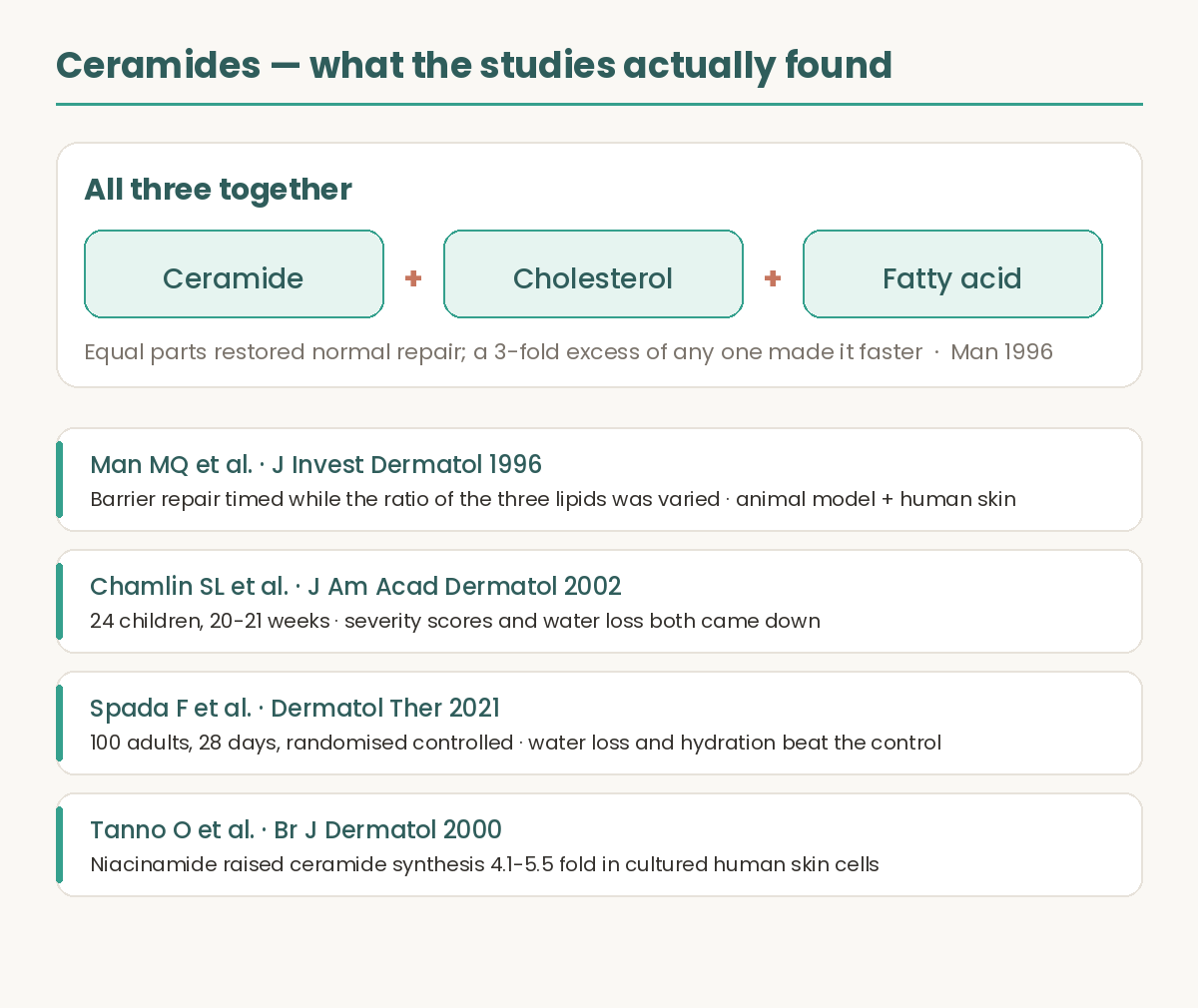
📌 Ceramides: the Cholesterol and Fatty Acid Ratio (Guide 4)
📌 Panthenol: What the Dexpanthenol Studies Show (Guide 7)
📌 Hyaluronic Acid: How to Read the Molecular Weight (Guide 6)
📌 How to Read a Korean Cosmetic Ingredient List (Guide 14)
About the author · Dr. J
MS in Veterinary Medicine, PhD in Life Sciences. I worked as a researcher at the Korea Research Institute of Bioscience and Biotechnology (KRIBB) and now run Beaurea, a cosmetics manufacturing company, where I write the formulas myself. This blog reads the research papers and the regulatory documents and turns them into plain-language criteria for choosing ingredients. I don’t recommend specific products here – only criteria that apply to any product.
📄 References
· Nam GW, Baek JH, Koh JS, Hwang JK, Skin Res Technol 2015;21(1):1-8
· Song EJ et al., Int J Cosmet Sci 2015;37(1):92-97
· Park EH et al., Skin Res Technol 2023;29(6):e13397
――――――――――――――――――――――――――――
This article summarises published research and is not a substitute for diagnosis or treatment. The figures are those confirmed in each paper’s abstract, and results shift with the climate and the period measured. If something about your skin worries you, please speak to a professional.
— Dr. J Ingredient Notes